Introduction
As the global demand for renewable energy accelerates, solar farms are being constructed in increasingly diverse and challenging environments—from vast deserts to rugged mountain slopes. While solar panels often get the spotlight, the stability of the entire system relies on what lies beneath: the pile foundation.
Enter the Solar Pile Driver (also known as a PV Piling Rig). This specialized piece of heavy machinery is the unsung hero of solar construction, ensuring that solar mounting systems are installed with speed, precision, and unwavering stability.
In this guide, we will break down exactly what a solar pile driver is, its critical components, and how different working modes adapt to various geological conditions.
1. What is a Solar Pile Driver?
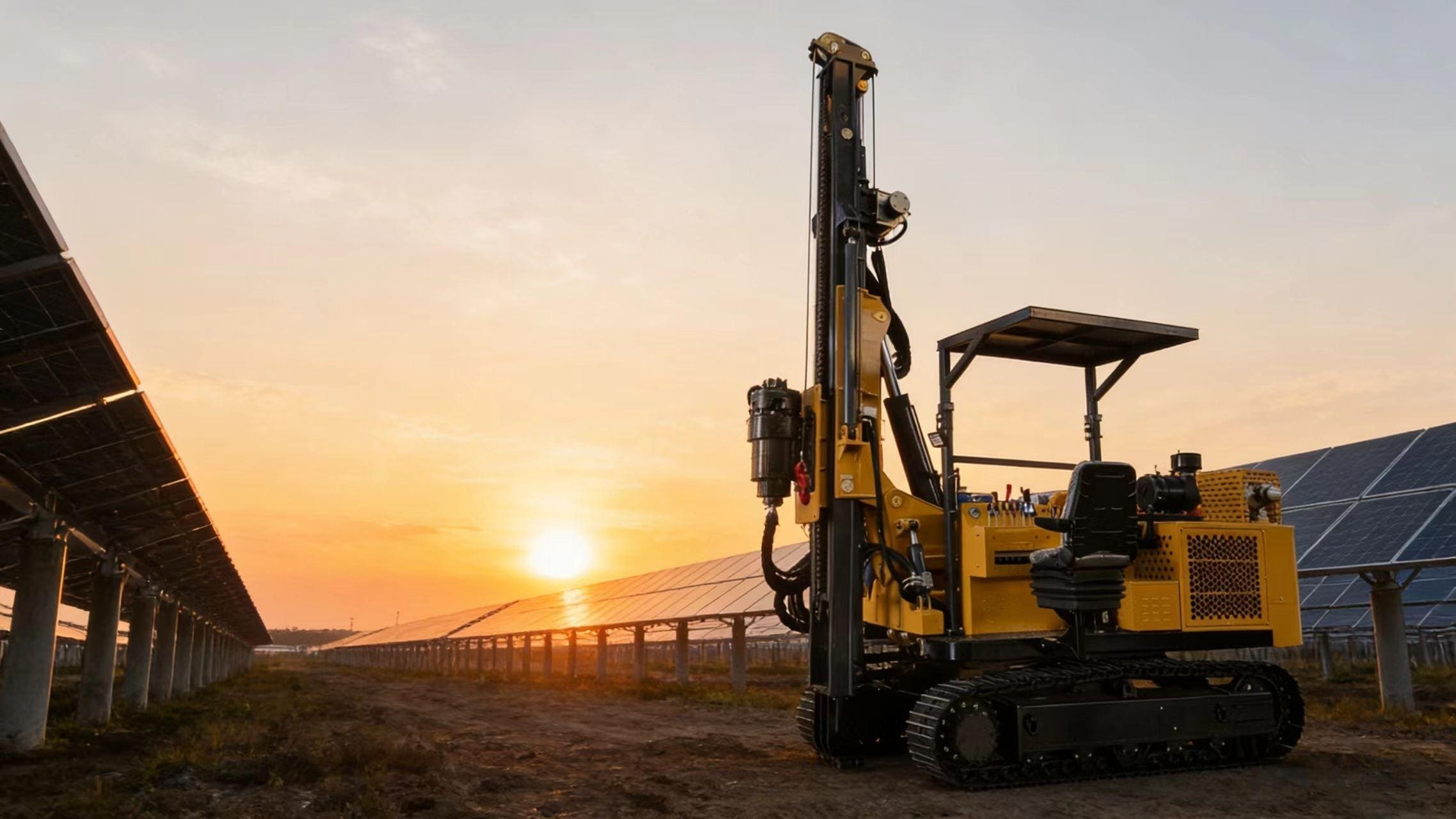
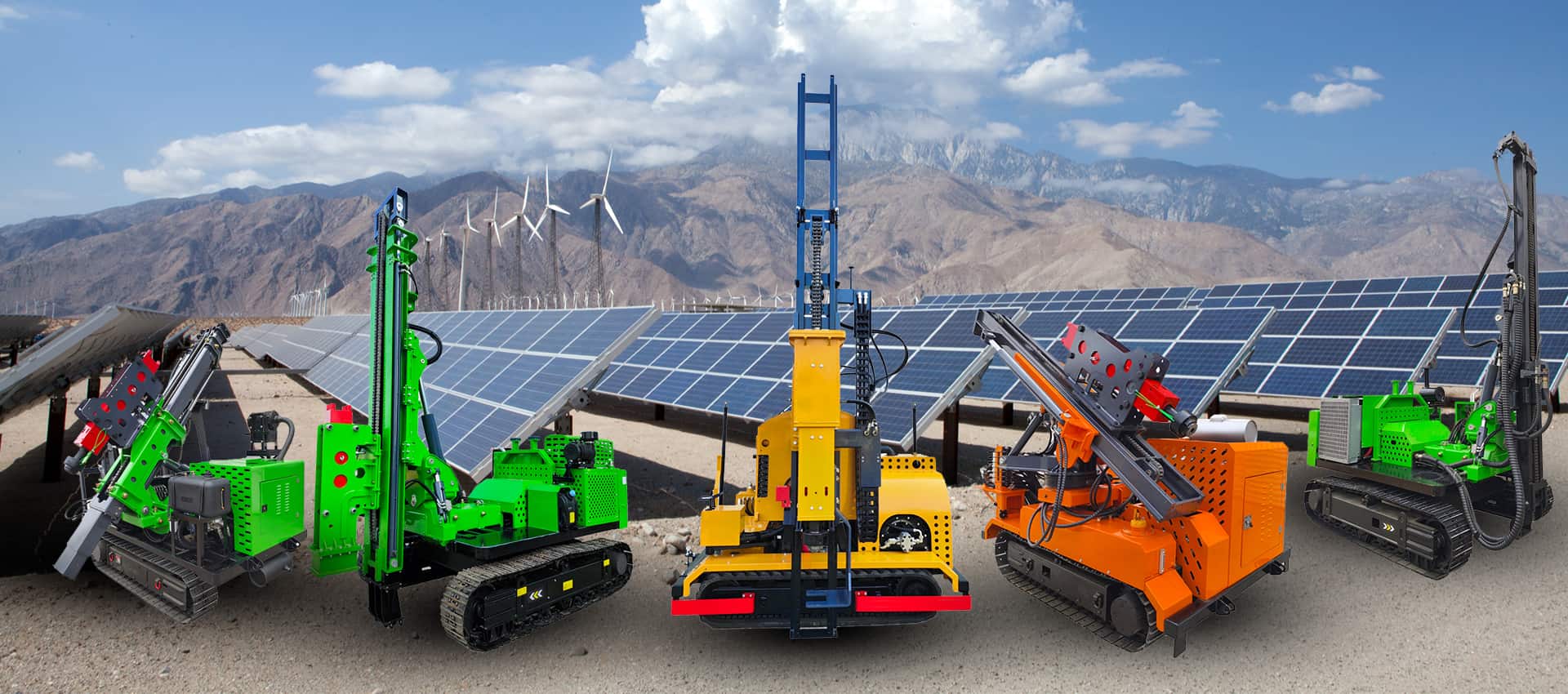
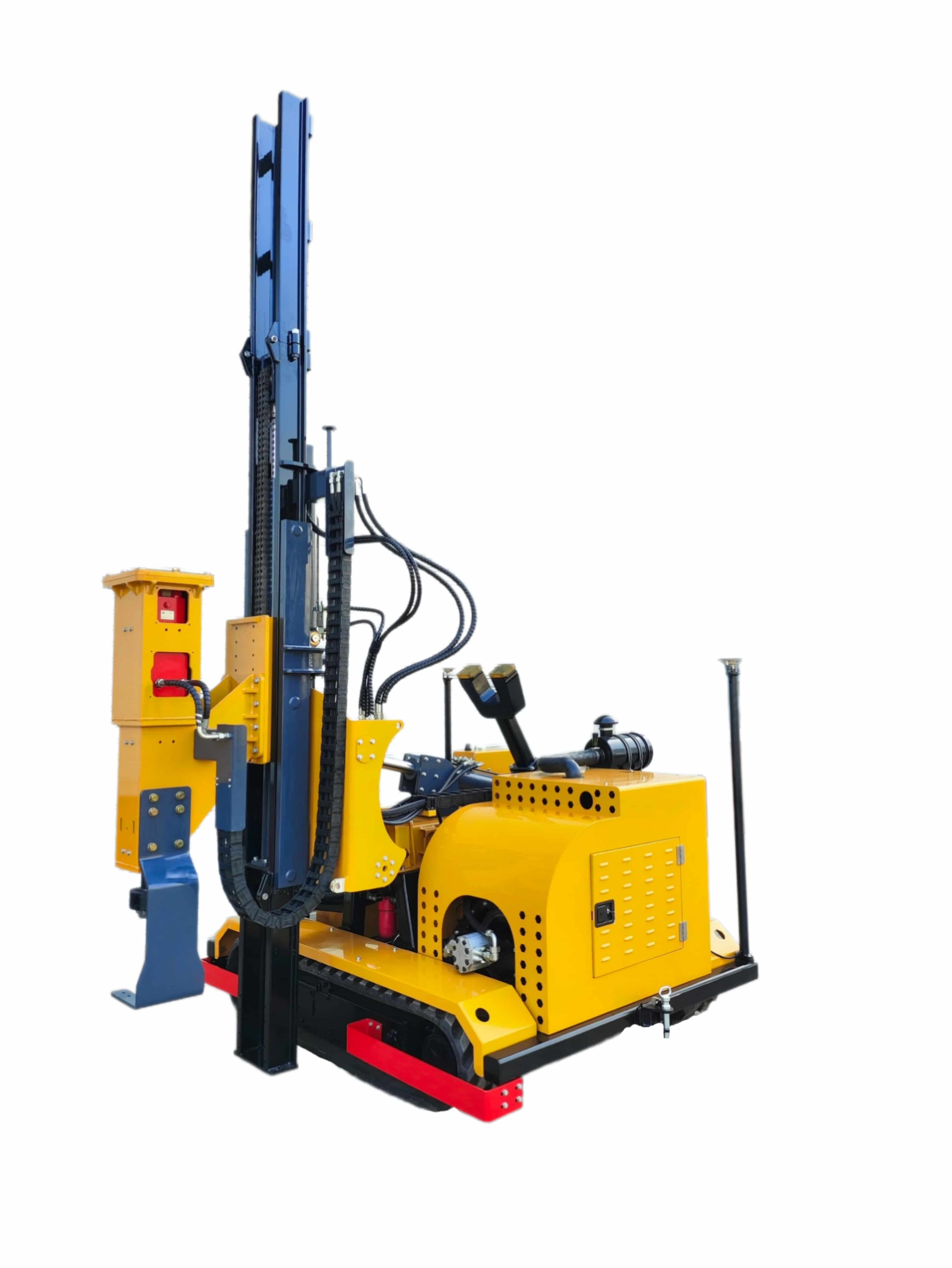
At its core, a Solar Pile Driver is a hydraulic engineering machine specifically designed for the installation of photovoltaic (PV) mounting systems. Unlike generic excavators modified for piling, these machines are purpose-built to handle the repetitive, high-precision demands of solar farm construction.
Key Components of a Professional Solar Pile Driver
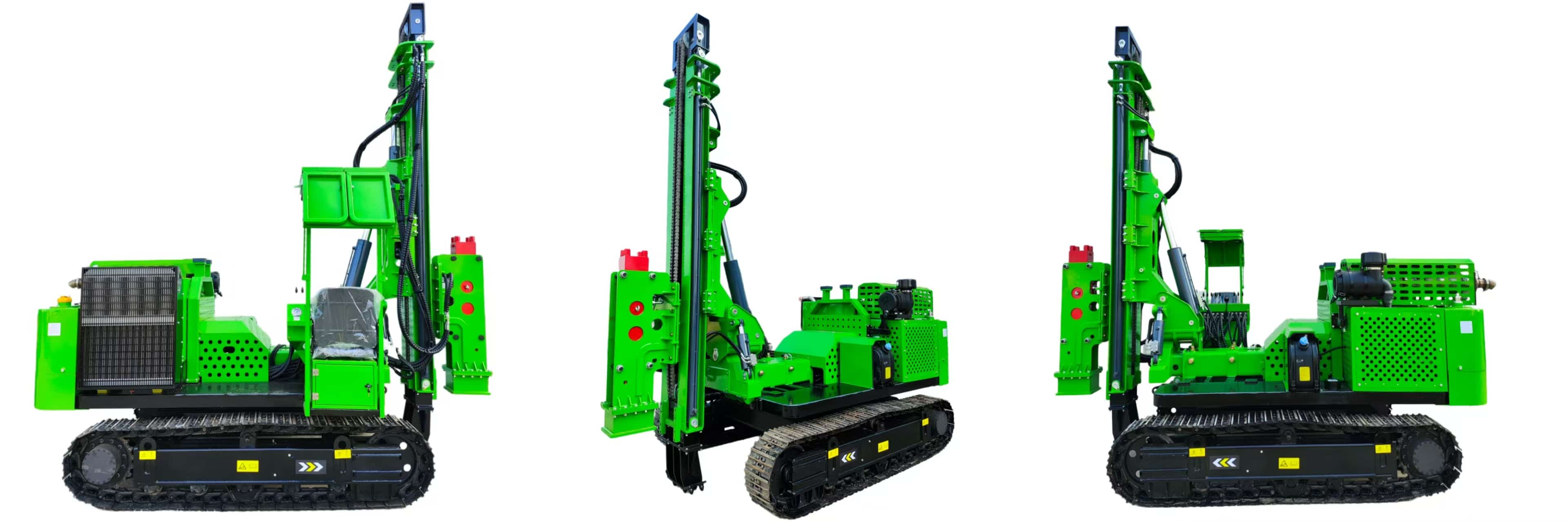
To understand the machine, you must understand the engineering behind it. A high-quality pile driver (like those manufactured by TeZhong) consists of several critical systems:
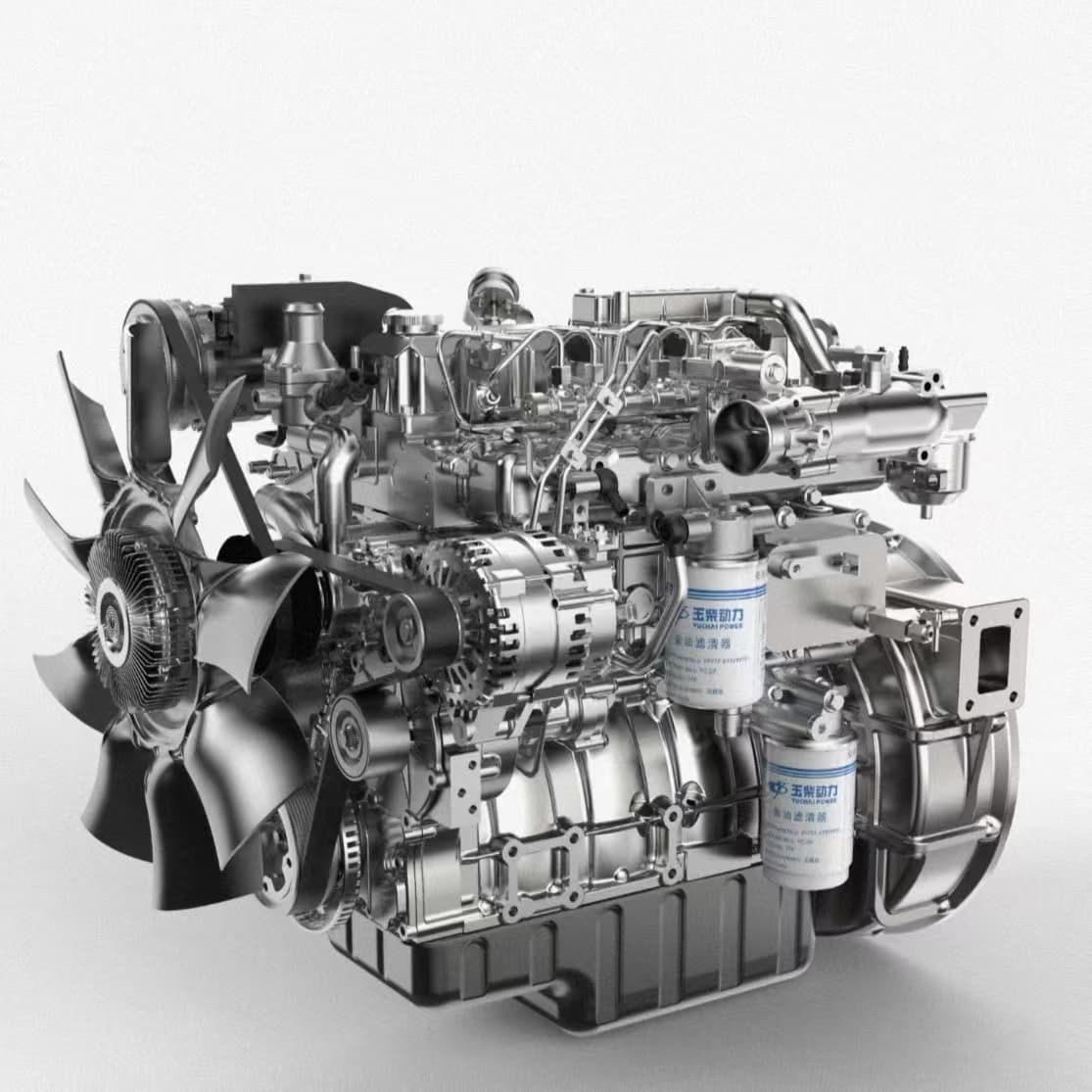
· Diesel Engine: The heart of the machine. It provides the necessary power to the hydraulic system, ensuring consistent performance even in high-altitude or extreme-temperature environments.
· Hydraulic System: This system converts engine power into the force needed for lifting, rotating, and hammering. A stable hydraulic system is the key to machine longevity.
· Crawler Chassis: A track-based undercarriage that offers low ground pressure and high traction. This allows the machine to navigate muddy, sandy, or sloped terrains (up to 30 degrees) without getting stuck.
· Mast (Guide Rail): The vertical tower that guides the pile or drill. It ensures the pile enters the ground at the exact correct angle (usually 90 degrees vertical).
· Hydraulic Hammer: The primary tool for impact driving. It delivers high-frequency blows to drive metal posts directly into the soil.
· Rotary Head (Hydraulic Motor): A crucial component for drilling. It provides the torque (rotational force) necessary for screwing in ground screws or drilling through rock.
2. How Does It Work? (4 Major Working Modes)
A versatile solar pile driver is not a "one-trick pony." Depending on the soil report of the solar site, the machine can switch between different attachments and working modes.
Here is a breakdown of the four primary operation modes and when to use them:
1. Hydraulic Ramming (Impact Piling)
· How it works: The machine uses the Hydraulic Hammer to pound C-posts, H-beams, or U-profiles directly into the ground.
· Best for: Clay, soft soil, and loam.
· Why use it: This is the fastest method. A skilled operator can install hundreds of piles per day, maximizing project speed.
2. Auger Drilling (Pre-drilling)
· How it works: The Rotary Head spins a spiral auger bit to drill a hole before the pile is inserted (often followed by concrete pouring or pile insertion).
· Best for: Compacted soil, frozen ground, or soil with gravel.
· Why use it: To loosen dense soil that is too hard for direct ramming but not hard enough to require DTH.
3. Ground Screw Installation (Screwing)
· How it works: The Rotary Head attaches to a specific adapter to grip the spiral ground screw. It then rotates the screw into the earth, similar to a power drill driving a screw into wood.
· Best for: Sandy soil or areas requiring high uplift resistance.
· Why use it: Ground screws offer excellent tension resistance and do not require concrete, making them an eco-friendly choice.
4. DTH Drilling (Down-The-Hole)
· How it works: Used in combination with an air compressor. The hammer action happens at the bottom of the hole (pneumatic impact) while the machine rotates the drill bit.
· Best for: Hard Rock, Basalt, and Limestone.
· Why use it: When the ground is too hard for a standard auger or hammer, DTH is the only efficient solution to penetrate rock layers.
3. Technology Spotlight: Intelligence & Automation
Modern pile driving isn't just about brute force; it's about intelligence. At TeZhong Pile Machine, we integrate advanced technology to solve common site problems:
· Remote Control Capability: Operators can control the rig from a safe distance. This provides better visibility of the pile alignment and increases safety on hazardous slopes.
· GPS & Auto-Leveling: Precision is everything. Our systems can integrate GPS positioning to locate exact pile points, and auto-leveling sensors ensure the mast remains perfectly vertical, even if the chassis is sitting on uneven ground.
4. The Critical Role in Solar Farm Construction
Why should EPC contractors invest in a dedicated Solar Pile Driver rather than renting general construction equipment?
1. Speed & Efficiency (ROI): Time is money. A dedicated pile driver is significantly faster than a retrofitted excavator. Faster installation means the solar farm connects to the grid sooner.
2. Precision & Quality: Solar racking systems have strict tolerances. If a pile is tilted by just a few degrees, the rails won't fit. Professional pile drivers ensure the verticality and position accuracy required for hassle-free racking installation.
3. Versatility: With one machine, you can tackle a site that has mixed geology (e.g., soft soil in one zone, rock in another) simply by changing the head from a Hammer to a Rotary head.
5. Conclusion
The Solar Pile Driver is the backbone of any ground-mounted photovoltaic project. Whether you are driving H-beams into soft clay or drilling through solid granite with DTH technology, selecting the right machine determines the speed and success of your project.
Looking for a reliable manufacturing partner?
At TeZhong Machinery, we have been dedicated to R&D and manufacturing of piling machinery for decades. From rock drilling to high-speed ramming, our machines are built to last.
· Visit our Solar Pile Driver: www.tzpilemachine/solar-pile-driver.com
· Contact us: Get a quote or technical consultation for your next solar project today!
A solar pile driver (also known as a photovoltaic drilling machine) is the core equipment for the construction of ground-mounted photovoltaic power plant projects. Its importance runs through the project's construction efficiency, project quality, cost control, and long-term operational stability, serving as a crucial prerequisite for the implementation of photovoltaic projects. Specifically, it is reflected in the following aspects:
Guarantees Structural Safety and Risk Resistance of Photovoltaic Power Plants
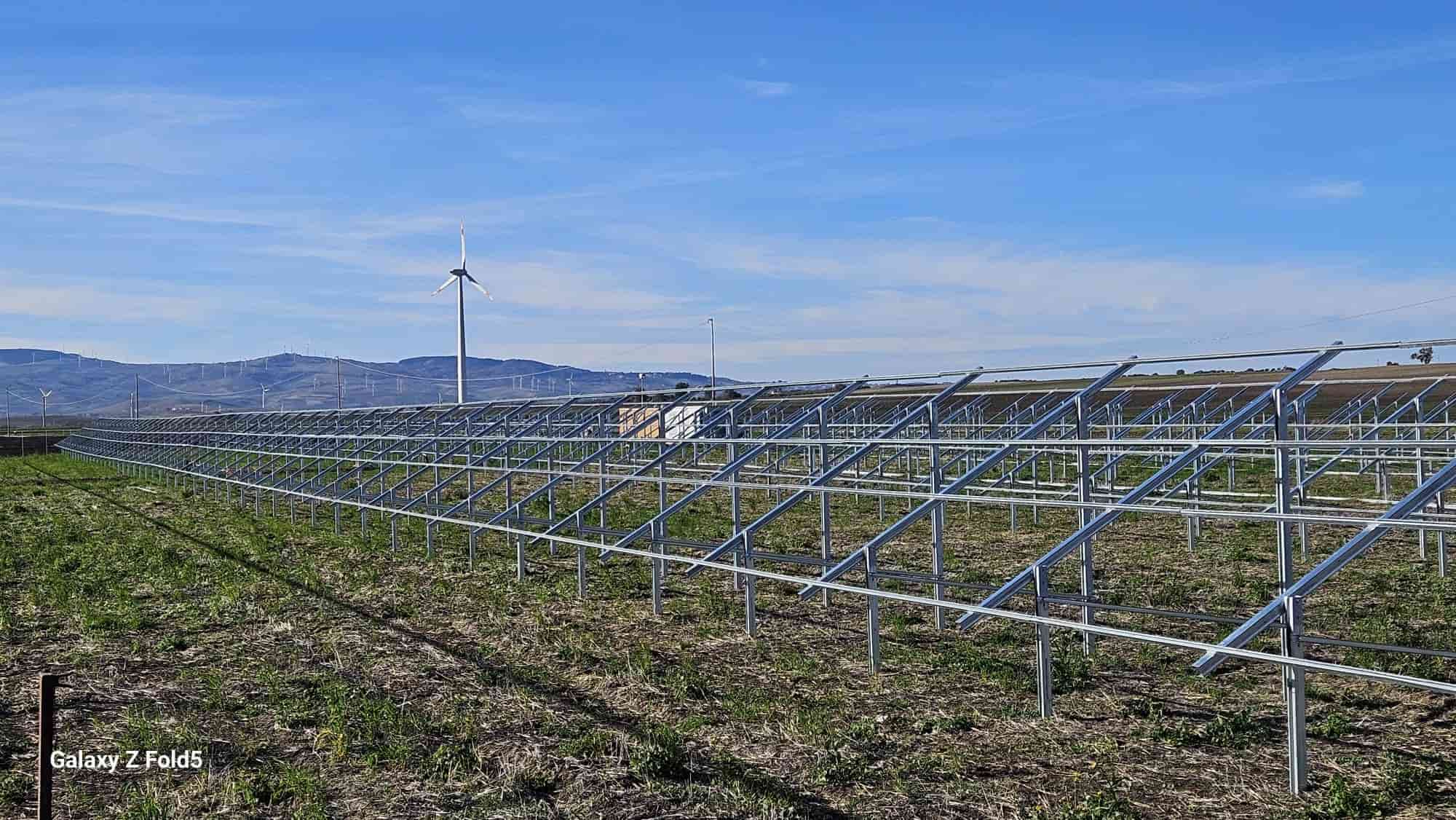
The core of a ground-mounted photovoltaic power plant lies in fixing photovoltaic panels on pile foundations through supports, and the primary function of a solar pile driver is to drill precise holes and form piles, providing a stable bearing foundation for the supports.
Photovoltaic projects in different regions are exposed to risks such as wind loads, snow loads, and geological settlement. The depth, diameter, and verticality of the piles constructed by the pile driver directly determine the anti-overturning capacity of the supports. For example: in windy areas, up-to-standard pile foundations can prevent photovoltaic panels from being blown over by strong winds; in soft soil areas, deep pile foundations can prevent supports from tilting due to geological settlement, thereby ensuring the designed service life of the power plant for more than 25 years.
Determines Construction Efficiency and Project Schedule of Photovoltaic Projects
Photovoltaic power plants typically feature "large-scale and decentralized" characteristics. A single large-scale project often requires tens of thousands of piles, and the construction sites are mostly open areas such as wastelands, slopes, and gobi deserts.
Professional solar pile drivers (such as crawler-type photovoltaic pile drivers) are designed specifically for photovoltaic construction scenarios, boasting advantages of flexible mobility, fast drilling speed, and high automation. A single piece of equipment can complete the construction of dozens to hundreds of piles per day, far exceeding the efficiency of traditional excavator-modified equipment. Efficient pile foundation construction can significantly shorten the project schedule, help the photovoltaic power plant connect to the grid for power generation in advance, and seize the window period of electricity price subsidies or the power generation revenue cycle.
Adapts to Complex Sites and Reduces Preliminary Infrastructure Costs
The site selection for photovoltaic projects often prioritizes the use of unused land (such as barren mountains, tidal flats, and saline-alkali land), which are characterized by complex terrain and diverse geological conditions.
The site adaptability of solar pile drivers is irreplaceable by traditional construction equipment: the crawler chassis can easily pass through muddy and rugged terrain without the need for large-area site leveling; for different geological conditions (sandy soil, clay, rock formations), it can be matched with different drilling tools such as auger drills and impact drills, avoiding additional processes such as blasting and soil replacement, and directly reducing preliminary site renovation and construction costs.
Ensures Construction Precision and Improves Long-Term Power Generation Efficiency of the Power Plant
The installation angle and arrangement spacing of photovoltaic panels directly affect power generation efficiency, and the accuracy of these two parameters depends on whether the hole position, elevation, and verticality of the pile foundations meet the standards.
Professional solar pile drivers are equipped with positioning and depth control systems, which can achieve millimeter-level drilling precision, ensuring that all supports are at the same horizontal height and photovoltaic panels are neatly arranged, thus avoiding light shielding or receiving angle deviations caused by support tilting. Precise construction can maximize the light-receiving area of photovoltaic panels, improve the overall power generation efficiency of the power plant, and directly translate into long-term economic benefits of the project.
Complies with Environmental Protection and Regulatory Requirements of Photovoltaic Projects
Photovoltaic projects themselves are clean energy projects, which have high requirements for the environmental friendliness of the construction process.
Most solar pile drivers adopt low-noise and low-emission power systems (such as engines meeting National IV/Euro IV emission standards), and the auger drilling process can realize "dry construction method", which does not require a large amount of water or mud for hole protection, reducing the damage to soil and surrounding ecology caused by construction. At the same time, compliant construction equipment and processes can meet the environmental impact assessment requirements of the project, avoiding construction delays or acceptance risks due to environmental protection issues.
Conclusion
A solar pile driver is a core construction equipment that acts as "a pivotal link connecting various stages" of photovoltaic projects: its construction quality determines the safety and power generation efficiency of the power plant, its construction efficiency determines the project schedule and revenue cycle, and its site adaptability determines the project's cost and environmental compliance. Under the trend of large-scale and high-quality development of the photovoltaic industry, professional and efficient solar pile drivers have become essential equipment for photovoltaic project construction.
Key Points Summary:
1. Soft soil projects may seem simple, but efficiency can vary significantly: Even under similar soil conditions, different equipment choices can lead to large differences in overall project progress.
2. Equipment stability determines construction efficiency:
Downforce control, hydraulic responsiveness, and continuous operation capability are key to maintaining high drilling efficiency.
3. Pursuing drilling speed too aggressively carries risks: Collapsing hole walls, accumulated drill debris, or misaligned holes can all reduce overall efficiency.
4. Three essential equipment selection criteria for soft soil projects: Stable continuous operation, minimal need for manual drilling correction, and a drilling pace that is not easily disrupted.
Conclusion: Choosing the right equipment matters more than merely chasing speed. Efficient and stable equipment can significantly reduce rework and improve overall construction progress in soft soil solar projects.
Introduction: Misconceptions about Soft Soil and Construction Efficiency
In many solar ground-mount projects, as soon as people hear "soft soil," "sandy soil," or "farmland," construction teams often breathe a sigh of relief.They assume, “No rocks, no blasting—drilling and pile driving should be smooth.”
But in reality, we often see a different scenario:Even in adjacent areas with almost identical soil conditions, drilling efficiency can vary by nearly double.Some areas progress smoothly, while others frequently stop or require adjustments, disrupting the overall project pace.
So, is it really just the soil?
Soft soil isn’t hard—but it does “test your equipment”
On paper, soft soil has natural advantages:
· Low resistance when drilling
· Smooth drill advancement
· Short drilling time per hole
However, soft soil also has a clear trait:Loose soil, uneven compaction, and varying conditions in backfilled areas.
In this type of terrain, the real efficiency gap isn’t about power—it’s about how consistently your equipment can perform throughout the project.
Why “drilling faster” can actually slow you down
This is a common pitfall in soft soil projects.
When drilling loose or backfilled soil, chasing speed can create problems like:
· Collapsing hole walls
· Accumulated debris requiring repeated clearing
· Misaligned holes that force rework
On the surface, it looks like “fast drilling,” but in reality, it becomes slow construction.
From multiple projects, we’ve consistently observed one conclusion:High efficiency in soft soil drilling comes from a stable pace, not maximum speed.
Even in soft soil, efficiency often starts with the equipment
Some equipment “can drill,” but it’s not optimized for long-term soft soil work, such as:
· Inconsistent downforce control
· Unsteady hydraulic response
· Reduced stability after several hours of continuous operation
A single hole may not reveal the problem, but when you’re drilling hundreds or thousands of holes, these small issues compound and slow the project down.
Solar projects are never about single-hole speed—they’re about batch drilling performance.
A practical rule: three quick checks for soft soil projects
From both manufacturer and field experience, we usually advise project teams to focus on three key questions:
1. Can the equipment maintain stable operation after 6–8 hours of continuous work?
2. Does drilling require frequent manual correction?
3. Can the equipment keep a steady pace when faced with backfill or local soil variations?
If all three are met, site drilling efficiency is usually strong, and overall project timelines become more predictable.
From a manufacturer’s perspective: soft soil needs the “right equipment”
As a long-term equipment supplier to solar EPCs and construction teams, Anhui Tezhong Machinery has noticed that in soft soil projects, the problem isn’t that the drill can’t penetrate—the problem is choosing the wrong equipment.
The most suitable equipment for soft soil usually has these traits:
· Stable output for long continuous operation
· Smooth control that reduces reliance on operator experience
· Mature design to handle variations in backfilled soil
These factors often determine actual efficiency far more than any spec sheet numbers.
What equipment works best for soft soil drilling?
Take our widely used TZ539 drilling solution as an example. It’s not about looking powerful on paper—it’s designed to address the real challenges of soft soil and typical site conditions:
· Maintaining stable holes in loose soil layers
· Minimizing collapses and rework
· Allowing continuous, controlled drilling pace
Many clients don’t notice equipment differences at the start of a project. But once the site is running, it quickly becomes clear:Whether the equipment is “easy to work with” often determines the real drilling efficiency in soft soil projects.
Conclusion: efficiency is often decided the moment you choose your equipment
Soft soil gives solar projects a good starting point, but turning that advantage into progress and cost savings still depends on equipment choice.From our experience at Anhui Tezhong Machinery,the right drilling equipment for soft soil should make construction easier, not more dependent on luck or operator skill.
If you’re planning a solar project on soft soil—or facing inconsistent drilling efficiency and excessive rework—we can help you evaluate whether your current equipment is suitable and explore more efficient, stable solutions tailored to your soil conditions, pile types, and project pace.
Sometimes, choosing the right equipment is the most efficient solution itself.
With the rapid development of the photovoltaic (PV) industry, the construction efficiency of solar power plants has become a core focus of industry competition. As the "key equipment" for foundation construction, the selection of a solar pile driver directly determines project progress, cost control, and construction quality. Purchasing a mismatched solar pile driver can lead to a disconnect between the equipment and actual needs, ultimately resulting in construction delays, increased additional investment, and other issues. Based on practical engineering scenarios, this article systematically sorts out the key considerations before purchasing a solar pile driver to help you avoid procurement pitfalls and select a truly suitable "reliable assistant."
I. Anchor the Construction Scenario: Clarify the Equipment’s "Compatibility Genes"
The core of selecting a solar pile driver lies in "scenario matching." Before purchasing, you must clearly define the core needs of the project to avoid blind selection:
1. Accurately assess geological conditions: Identify the soil properties at the construction site—whether it is soft soil such as clay or sand, or hard soil such as weathered rock? Soil hardness directly determines the power configuration and drilling tool selection of the pile driver, making it the primary basis for model selection.
2. Confirm key pile parameters: Common piles used in PV power plants include three types: ground screw piles, precast concrete piles, and steel sheet piles. It is necessary to determine key indicators such as pile height and diameter in advance to ensure the equipment can be customized accordingly, avoiding the embarrassment of "pile driver-pile mismatch."
II. Focus on Durability: Two Core Components Determine Long-Term Costs
Solar pile drivers often operate continuously under high intensity outdoors, so equipment durability directly determines the "total lifecycle cost" and service life. When purchasing, focus on verifying the following two core components:
1. Chassis and traveling mechanism: Adapt to complex terrains
l Crawler-type models: Prioritize "high manganese steel + rubber composite tracks," which offer excellent wear resistance and tear resistance. They can easily handle rough surfaces such as gravel and sand, reducing track wear and tear.
l Wheel-type models: Confirm whether the tires are "engineering-grade explosion-proof tires" to avoid downtime risks caused by tire blowouts during field operations.
2. Rotating head and drilling tools: The "heart" and "teeth" of the equipment
l As the "heart" of the hydraulic pile driver, the power head’s material (e.g., high-strength alloy steel) and warranty period (reputable manufacturers usually offer a 1 year warranty) directly determine its service life.
l For drilling tools (e.g., auger drills for ground screws), prioritize "detachable and easy-to-replace" models. After wear and tear, there is no need to replace the entire power head, which can significantly reduce maintenance costs.
III. Pay Attention to User Experience: Operation and After-Sales Service Cannot Be Ignored
Many purchasers only focus on equipment performance but overlook operational convenience and after-sales support, leading to constant troubles in later use. When purchasing, confirm the following three key points:
1. Operation difficulty and training support
l If the project team has many new operators, it is advisable to prioritize models with "intelligent operation panels," such as those equipped with touchscreen control and one-key piling functions, which can significantly reduce the learning cost of operation.
l At the same time, must require the manufacturer to provide "free on-site training" to ensure operators proficiently master safety specifications and operating skills, avoiding equipment damage or safety accidents caused by improper operation.
2. After-sales response speed: The "safety line" for construction in remote areas
l PV construction is mostly carried out in remote areas, and the after-sales response speed after equipment failure directly affects the construction period. Before purchasing, clarify two core questions: Is the manufacturer’s after-sales response time ≤24 hours? Do they provide "urgent delivery of spare parts" service? Ensure rapid resumption of construction after a failure.
3. Spare parts supply: Avoid the risk of "downtime due to lack of parts"
l Confirm the timeliness of supply for wearing parts such as drill bits, hydraulic oil filters, and diesel filters, and whether convenient procurement methods such as online ordering are supported. Prevent long-term equipment downtime due to lack of parts, which affects project progress.
Conclusion: Three Practical Tips to Help You Avoid Detours
1. Prioritize "PV-specific" models: Do not use modified general construction pile drivers as substitutes—PV-specific models are more suitable for PV project needs in terms of pile diameter compatibility, operation efficiency, and terrain adaptability, fundamentally reducing later compatibility issues.
2. Verify qualifications and certifications: Prioritize manufacturers with ISO9001 quality certification and CE certification (for export-related cases), as equipment quality and safety are more guaranteed.
3. On-site inspection or trial (if conditions permit): For large-scale projects, it is recommended to conduct an on-site inspection of the manufacturer’s production capacity to intuitively experience equipment performance and operation efficiency before finalizing the procurement plan.
The essence of selecting a solar pile driver is a process of "accurately matching project needs and balancing cost and efficiency." It is hoped that this guide will help you avoid procurement misunderstandings, select truly suitable equipment, and make PV power plant construction smoother and more efficient.
Want to make your solar installation project faster, easier and more cost-effective? TeZhong Machinery is your ultimate destination for high-quality solar PV pile drivers for ground installation.
Why choose TeZhong - Solar Pile Drivers TZ536 machine?
✔: Efficient Solution: The TZ536 Pile Driver is designed to simplify your solar installation.
✔: Trusted Durability: Built to withstand the toughest conditions, ensuring long-term reliability.
✔: Competitive Pricing: Affordable solution without compromising quality.
✔: Expert Support: TeZhong - Solar Pile Drivers is here to help!
Whether you are installing solar panels for a commercial or utility-scale project, TeZhong - Solar Pile Drivers provides everything you need to stay ahead in this rapidly evolving industry.
Discover the power and reliability of the TZ536:
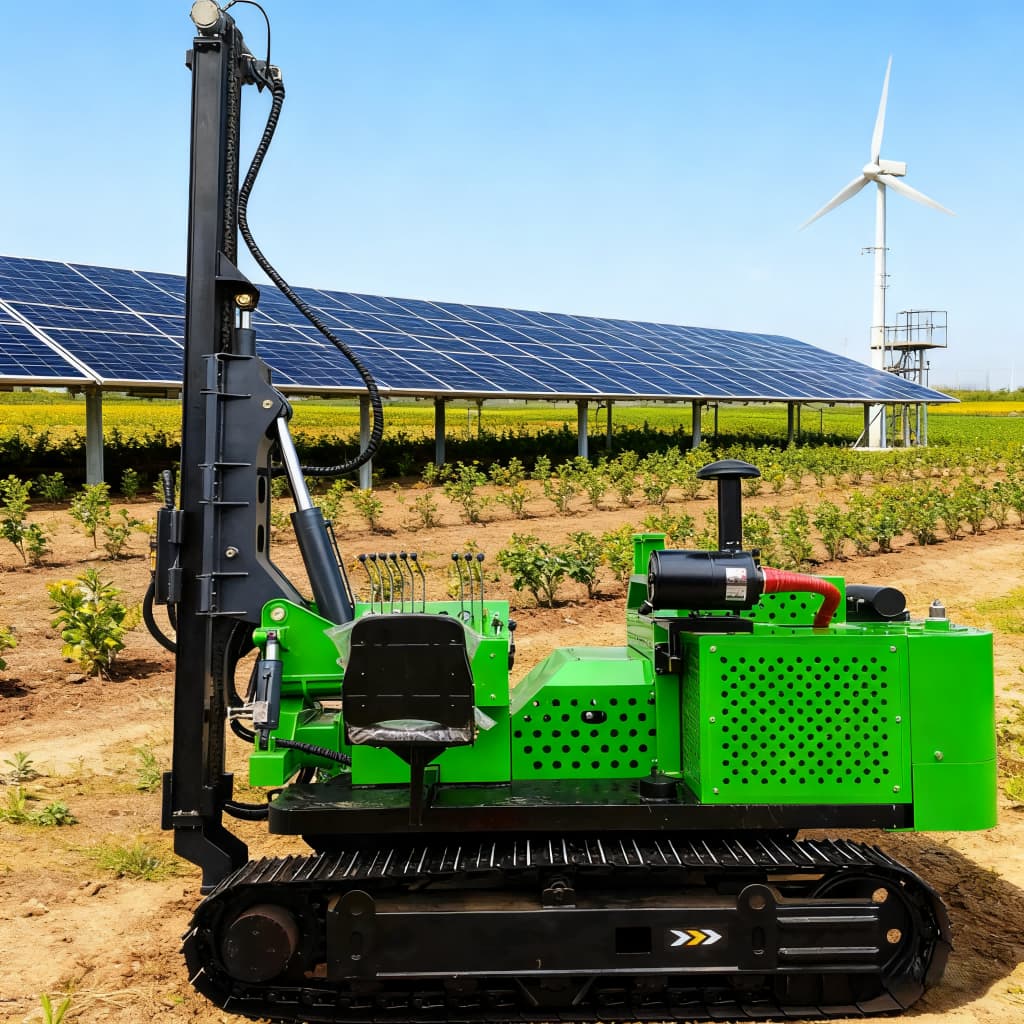
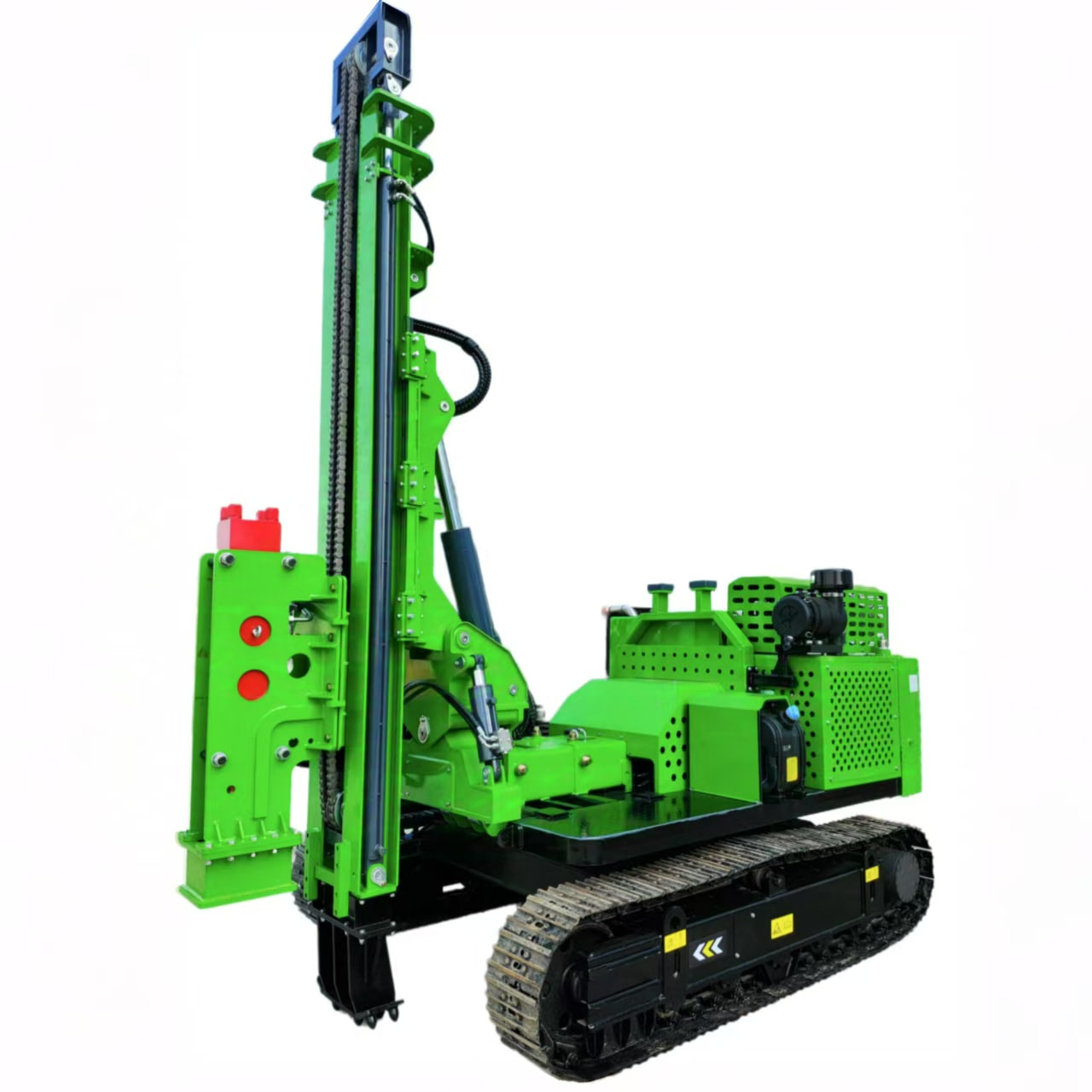
1. Versatility: The hydraulic hammer and rotating head (hydraulic drilling motor) of the working accessories can be easily switched. They are specially designed for photovoltaic power station construction and can complete various complex working conditions such as pile driving, pile pulling / screw pile driving / auger drilling / impact drilling, which almost covers all construction scenarios in pile foundation construction in photovoltaic power station construction.
In addition, it supports customization and can be made into a working accessory with hydraulic hammer and rotating head, so there is no need to disassemble and replace.
2. The effective travel of the mast is 5 meters, plus a compensation height of 1 meter, so that TZ536 can handle piling work below 6 meters and drilling work below 5.5 meters, which can meet most construction needs. In addition, we have customized 8m high masts for customers, which require the addition and balancing of counterweights.
3. The mast can be extended 40cm horizontally, with a maximum forward tilt angle of 100° and a luffing cylinder that can swing 10° left and right. This makes the TZ536 more flexible, and the vertical angle can be adjusted according to the ground conditions, adapting to more complex working conditions.
4. Engine: The standard configuration is Yuchai 91KW,124Horsepower turbocharged four-cylinder diesel engine, which is powerful and reliable, and the turbocharger allows it to operate normally in high altitude areas. In addition, the engine can be customized with engines of other brands and emission standards, such as Cummins engines that meet Euro V emission standards.
5.360° rotation: The rotary motor and rotary bearing adopt the well-known domestic hydraulic brand - Zhongyi. The construction personnel can easily adjust the angle and direction of the drilling rig at the construction site to meet different operation requirements.
6. Tracks: The hydraulic motors of Eddie, a well-known domestic hydraulic brand, are reliable and durable, and customers have reported that there have been no problems. Each track is 2800mm long, 300mm wide, and 600mm high. These precise dimensions allow it to easily cope with the most difficult terrain. In addition to steel tracks, rubber tracks can also be customized, and rubber blocks can be added to steel tracks (if used in highway guardrail construction, it can prevent damage to the highway.
7. Hydraulic oil tank capacity: 105 liters. A breathing valve is installed on the top of the hydraulic oil tank to balance the air pressure inside the hydraulic oil tank. At the same time, it has excellent sealing performance to prevent the hydraulic oil from being contaminated and emulsified. The hydraulic oil can be used for a longer time and reduce costs.
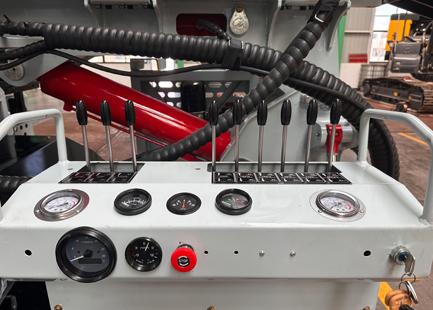
8. Integrated operating table, one person can complete all operations of the machine.
9. Remote control system: Support customized remote control system. All operations can be completed by remote control, and the remote control distance is about 100m, which greatly reduces the difficulty of construction and improves construction efficiency.
The TZ536 solar pile driver is comprehensive in functions and can easily complete various complex construction operations such as piling, screw pile driving, impact drilling, spiral drilling, etc.
It uses Yuchai's four-cylinder turbocharged 91KW engine, which has high driving force and stability. The turbocharging feature allows it to adapt to high altitude areas and complete tasks excellently.
The pile driver body can rotate 360° and adopts a well-known domestic brand. The slewing motor and slewing bearing are ZhongYi products. Construction workers can easily adjust the angle and direction of TZ536 at the construction site to meet different operation requirements, making construction more convenient and efficient.
The effective travel of the normal model of mast is 5 meters, the compensation height is 1 meter, and 6-meter piles can be driven. Masts of different heights can be customized according to your requirements. The highest mast customized by our customers is 8 meters.
With both flexibility and reliability, the mast can be extended 40cm horizontally, the luffing cylinder can swing 10° left and right, and the maximum forward tilt angle is 100°. The vertical angle can be adjusted according to the ground conditions to meet the construction needs under different terrain conditions.
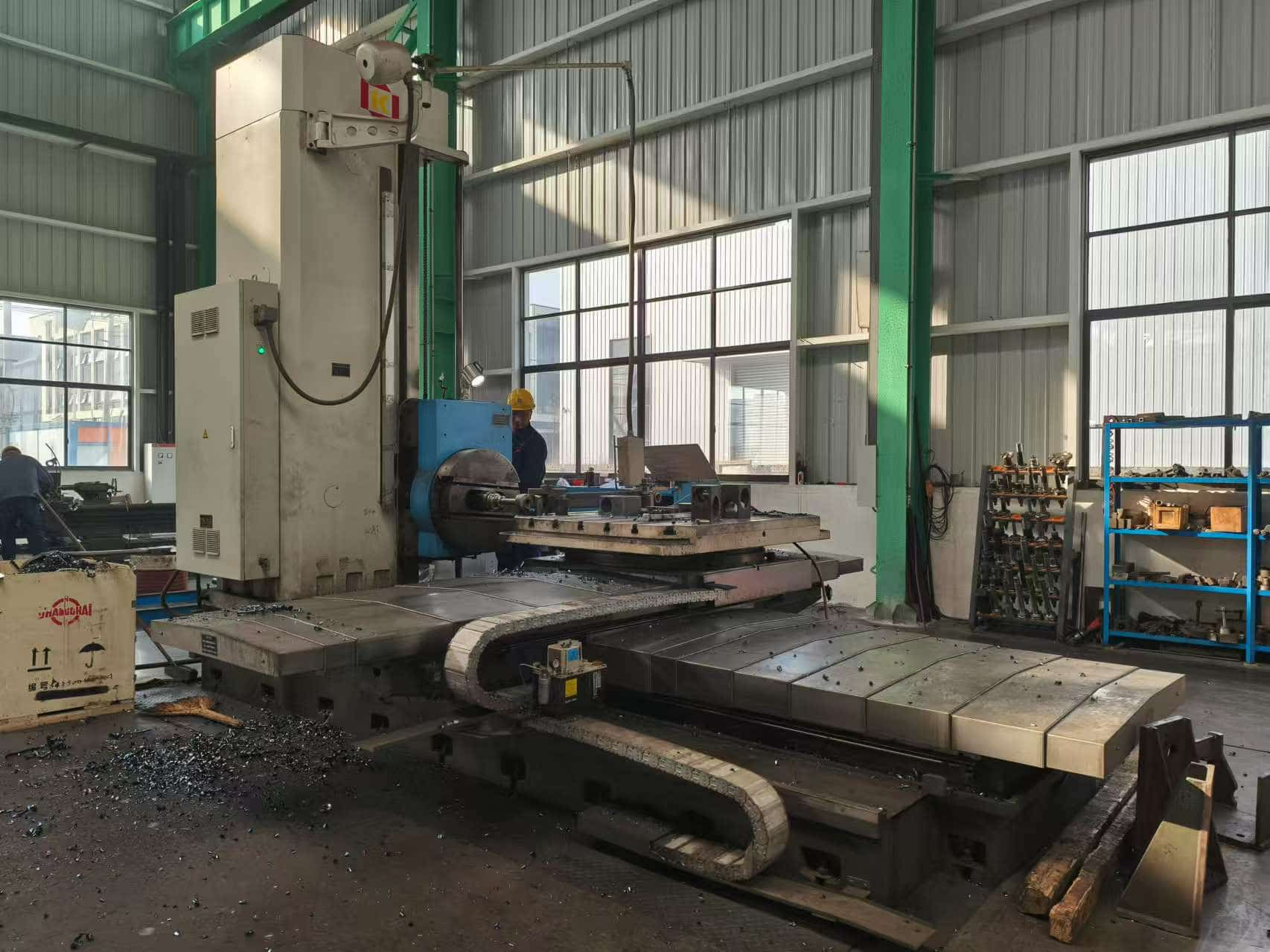
1.Sawing machine: responsible for processing raw steel and raw materials.2.Drilling machine: responsible for general drilling tasks.
3.CNC machine tools: responsible for the production of precision parts, with high efficiency and high precision.4.Ordinary lathe: turning and drilling.5.Boring machine: high drilling accuracy, responsible for high-precision drilling tasks.
6.Paint room: responsible for internal and external paint (baking paint process, no color difference, and basically no fading)7.Shot blasting room: responsible for surface rust removal and stain removal.
8. Laser cutting machine: greatly improves cutting accuracy and efficiency, while lowering processing costs.
9. Welding robot: stable welding quality and high production efficiency.
So, you will understand why the quality of our pile drivers is so outstanding - the design and processing equipment are accurate to the mm level, and we even have unique skills in painting and shot blasting, all of which can make our guardrail pile drivers,solar pile driverss more reliable and more outstanding.
The following engine maintenance knowledge takes the Yuchai 91Kw four-cylinder turbocharged diesel engine commonly used by our pile driver manufacturers on solar pile drivers as an example:
Daily maintenance
Check the oil: Check the oil, coolant and fuel levels before starting the machine every day to see if they are within the normal range. If they are insufficient, add them in time.
Appearance cleaning: Open the hood at the rear end of the pile driver and wipe the oil and dust on the engine surface with a rag frequently to keep the engine appearance clean, so as to find out if there are any abnormalities such as leakage in time.
Check the belt: Check the tension and appearance of the engine belt regularly to see if there are any abnormalities such as cracks and wear. If any problems are found, adjust or replace them in time.
First-level maintenance (performed after 100 cumulative working hours)
Replace the engine oil and clean the crankcase: Replace all the engine oil in the crankcase and clean the crankcase with diesel. Drain the oil and clean the crankcase after the machine is warm so that the impurities in the engine oil can be discharged better.Generally, the engine oil can be filled to the middle of the yellow area at the end of the dipstick.During the running-in period of the pile driver, a lot of metal debris and other impurities will be produced, which need to be cleaned up.
Clean the air filter: Open the air filter, remove the filter element, and remove the dust and dirt on the filter element. If the filter element is damaged, replace it immediately.Note: The air filter element cannot be rinsed with water. Dust and dirt can only be blown away with a high-pressure airflow. If water is used for rinsing, the air filter element will be damaged.
Check the diesel filter: After 200 cumulative hours of operation, remove the diesel filter element and clean it with clean diesel. If the filter element is damaged, replace it immediately.
Secondary maintenance (performed after 500 cumulative working hours)
Check and adjust valve clearance: Check and adjust the clearance of intake and exhaust valves to ensure the normal opening and closing of valves and the normal intake and exhaust of the engine.
Injector maintenance: Check the injection of injectors, clean the injectors and correct the injection pressure to ensure the normal injection atomization effect of the injectors and improve the combustion efficiency.
Check valve seal: Check the sealing of valves and valve seats, and grind and correct them if necessary to prevent valve leakage and affect engine performance.
Check fasteners: Check the fastening and anti-loosening of cylinder head nuts, connecting rod nuts, and flywheel nuts to ensure that all components are firmly connected.
Piston connecting rod assembly inspection: Take out the piston connecting rod assembly, check the piston ring opening clearance, clean and remove carbon deposits in various places on the piston head and piston ring groove.
Check crankshaft oil seal: Check the crankshaft oil seal. If hardening or lip damage is found, it should be replaced.
Wear measurement: For every 1000 cumulative working hours, the following maintenance items need to be added: Check and measure the wear and clearance of the cylinder liner and piston; check and measure the wear and clearance of the crankshaft connecting rod journal and connecting rod bearing; check the wear and clearance of the valve rocker arm and rocker arm shaft, valve and valve guide hole.
In the fields of research and development, production, manufacturing, and sales of pile drivers, our company has been committed to promoting technological innovation and providing customers with more efficient and intelligent solutions. Recently, we are proud to introduce our brand-new product - the TZD intelligent pile driver, which is undoubtedly a significant technological breakthrough in the pile driver industry.
The TZD intelligent pile driver incorporates the automatic control system of the pile driver, which integrates functions such as automatic walking, navigation, and automatic piling, realizing the fully automatic control of the pile driver. This innovative technology not only improves the construction efficiency but also reduces the labor cost, bringing about a brand-new transformation to photovoltaic construction and road guardrail construction.
The system is compatible with two working modes, namely the hammer head and the rotary head. The operators of the pile driver can easily control the pile driver with just a remote control and a tablet. The tablet is connected to the control terminal of the intelligent system for pile foundation construction via WIFI. The control terminal responds to the instructions from the tablet in real time, calculates based on the data returned by various sensors, and precisely controls the pile driver to perform actions such as drill arm resetting, slide frame straightening, slide frame resetting, walking, navigation alignment, pile hanging, and piling.
The system mainly consists of the following parts
The control terminal of the intelligent control system for pile foundation construction: As the core component, it is responsible for receiving instructions, processing data, and controlling various actions of the pile driver.
The APP of the intelligent control system for pile foundation construction: Through this APP, operators can set parameters more conveniently, monitor the construction progress, and check the equipment status.
3. The auxiliary remote control of the intelligent control system for pile foundation construction: In cases where it is inconvenient to operate with the tablet, the auxiliary remote control can provide an additional control method to ensure the smooth progress of the construction.
One person can complete all the piling construction tasks, which greatly improves the flexibility and efficiency of the construction. Whether in photovoltaic construction or road guardrail construction, the TZD intelligent pile driver can exert great advantages. Its emergence makes the construction more intelligent and efficient, empowering the world's infrastructure construction.
We believe that the introduction of the TZD intelligent pile driver will bring new development opportunities to the pile driver industry. We will continue to be committed to technological innovation, continuously improve the performance and quality of our products, and provide customers with more excellent services. Let's look forward to the TZD intelligent pile driver playing a greater role in future infrastructure construction together!
What is a Hydraulic Static Pile Driver?
Hydraulic Static Pile Driver is a powerful and efficient machine used in construction projects to install piles into the ground. With its hydraulic power, static pressing method, versatility, and precise control, it offers a reliable solution for creating stable foundations in various types of soil.
Benefits of Hydraulic Static Pile Drivers:
Hydraulic Power: The machine utilizes hydraulic systems to generate high power and force required for pile driving. Hydraulic cylinders create the driving force to push the piles into the ground with precision and control.
Static Pile Driving Method: Unlike traditional methods that use impact or vibration, the Hydraulic Static Pile Driver relies on static pressing. It gradually applies a consistent force to the pile, ensuring deeper and more uniform penetration into the soil. This method reduces noise and vibration, minimizing environmental impact and potential damage to nearby structures.
High Efficiency: Hydraulic Static Pile Drivers are known for their high efficiency in pile installation. They can drive piles quickly and continuously, even in challenging soil conditions. This efficiency reduces construction time and costs, improving overall productivity on the job site.
Versatility: The Hydraulic Static Pile Driver is adaptable to various pile types, including steel, concrete, and composite piles. It can handle different pile diameters and lengths, allowing flexibility in construction projects with varying requirements.
Precise Control and Monitoring: These machines are equipped with advanced control systems that allow operators to precisely control the driving force and monitor the pile installation process. Real-time data, such as penetration depth and driving resistance, can be collected and analyzed for quality assurance.
Safety Features: Hydraulic Static Pile Drivers are designed with safety features to protect operators and ensure safe operations. These include overload protection, emergency stop mechanisms, and safety guards to prevent accidents and injuries.
Environmental Friendliness: The static pile driving method used by Hydraulic Static Pile Drivers generates minimal noise and vibration, significantly reducing disturbances to nearby residents and the environment. This makes them an environmentally friendly option for pile installation.




 IPv6 network supported