EPC contractors often ask:
“Ground screws or helical piles — which should we use?”
The answer isn’t about which is better — it depends on site conditions, load requirements, and project constraints. Selecting the appropriate system affects installation speed, cost, and long-term stability. Understanding the differences between the two foundation types helps EPC teams plan more efficiently and avoid common pitfalls.
1. Understanding the Site Factors
Before comparing foundation systems, consider:
Soil type: uniform, mixed, gravel, or rocky layers
Load requirements: light solar structures vs heavy steel or industrial foundations
Site accessibility: can large rigs or equipment reach the area?
Project timeline: urgent vs flexible
These factors often determine the most suitable foundation type for a project, rather than the product alone.
2. Ground Screws: Fast, Efficient, and Reusable
Ground screws excel in flat land with uniform soil, especially for projects where speed and minimal disturbance are priorities.
Advantages:
No concrete → zero curing time
Fast installation → higher daily productivity
Minimal site disturbance → suitable for sensitive environments
Easy removal → reusable and sustainable
Best for: distributed solar, temporary or semi-permanent structures, fast-track projects.
3. Helical Piles: Reliable in Complex Soil
Helical piles provide stronger, deeper support where soil is mixed, rocky, or near bedrock. Their helix plates improve bearing capacity and settlement resistance.
Advantages:
Higher load capacity
Deeper penetration for stability
Predictable performance via torque monitoring
Reduced long-term settlement risk
Best for: uneven terrain, industrial foundations, high-load solar projects.
4. Torque Control: The Overlooked Key
Installation quality is critical. Even the best pile can underperform if torque isn’t controlled. Unstable torque can lead to:
Inaccurate bearing capacity
Uneven settlement
Difficulty verifying design requirements
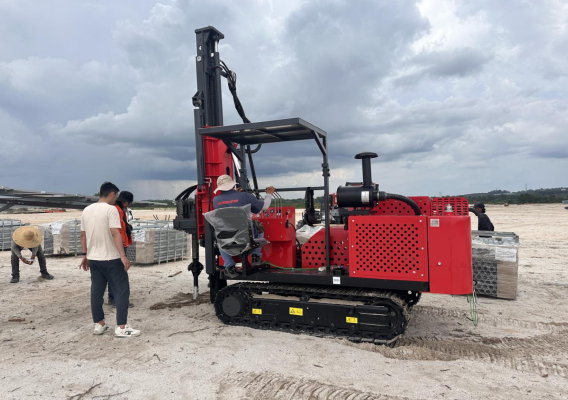
Tezhong solution: stable torque output, controlled rotation, and real-time monitoring to ensure every pile meets engineering specifications.
5. Cost Perspective: Short-Term vs Long-Term
Ground screws save: installation time, labor, material → ideal for fast-track, budget-conscious projects
Helical piles save: rework, structural risk, long-term maintenance → ideal for complex, high-value projects
Equipment also matters — reliable machines reduce errors, improve speed, and ensure consistent quality, especially on small- to mid-size EPC projects or sites with limited access.
6. Choosing the Right Foundation
Quick guide for EPC teams:
Uniform soil + fast installation → Ground Screws
Mixed soil + high load → Helical Piles
When in doubt, perform a test installation with torque measurement to confirm performance.
Tezhong recommends: assess soil, define load, test torque, select the right system, and use stable, controlled equipment. This ensures every pile delivers real-world reliability and project success.
👉 Contact Tezhong to discuss your solar project and optimize your foundation solution.



 IPv6 network supported