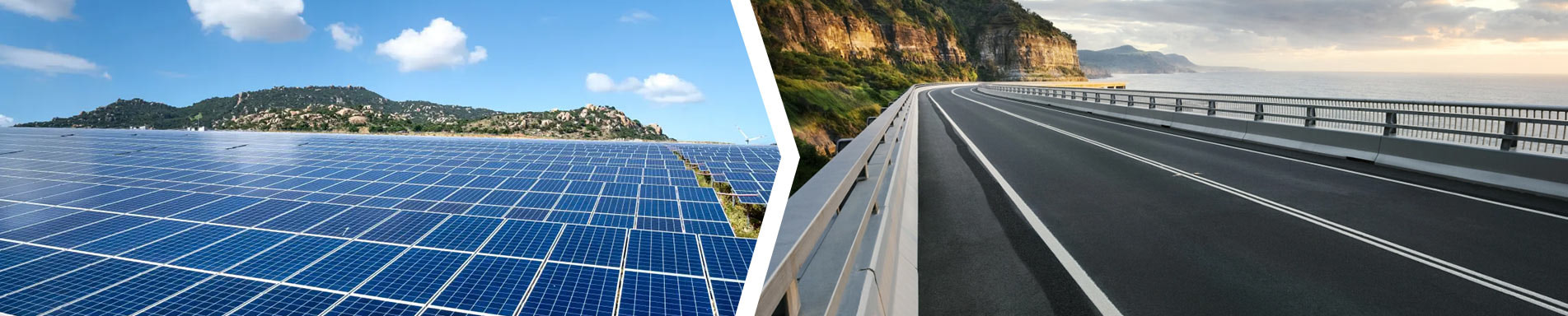
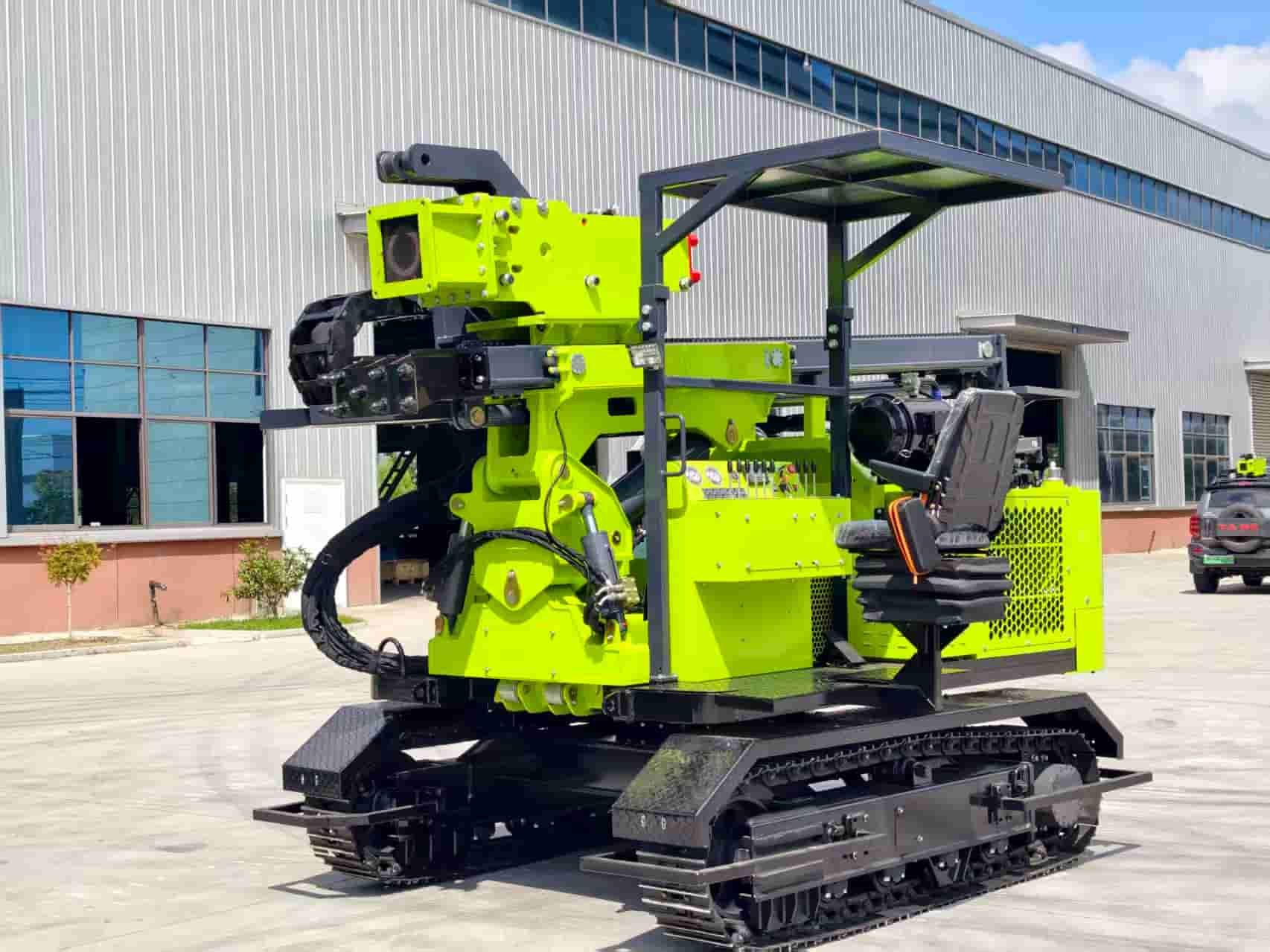
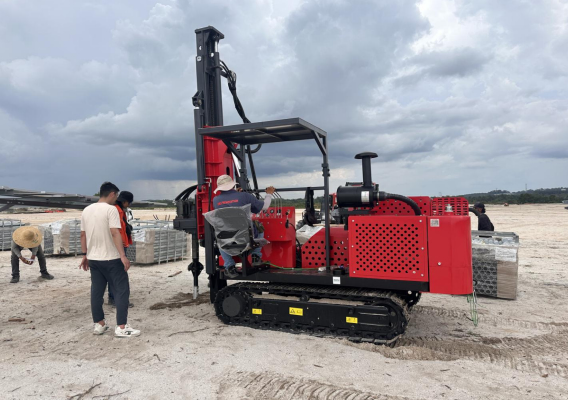
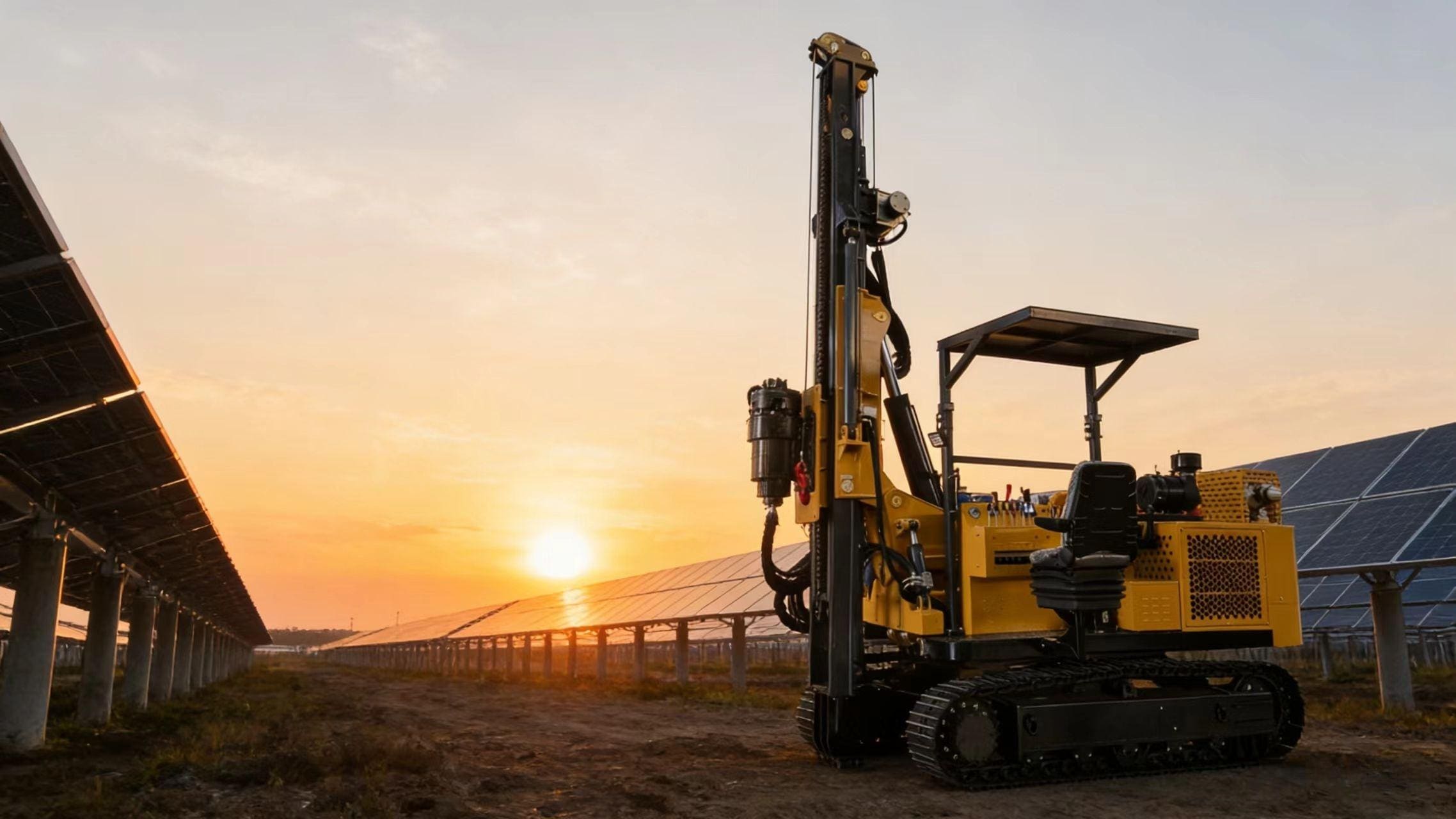
piling rig for guardrail
Home

Blog

Blog

  • Who Is the Best Rock Drilling Equipment Manufacturer in China?
    Oct 22, 2026
    A DTH drilling rig (down-the-hole drilling rig) is a drilling machine where a pneumatic hammer is attached to the bottom of the drill string and delivers percussive blows directly at the drill bit, while compressed air both powers the hammer and flushes cuttings. DTH drilling is the method of choice for hard and fractured rock, whereas a rotary auger (rotary screw) excels in soft soil and loose ground. For solar farms and foundations that cross mixed geology, many contractors choose a 3-in-1 platform that combines DTH rock drilling, rotary auger soil drilling, and hydraulic pile ramming on one machine. Buyers evaluating a DTH drilling rig manufacturer or supplier should look at hammer compatibility, matched air-compressor sizing, and the vendor's ability to service the down-hole tooling — not just the rig price. TeZhong DTH drilling rig boring foundation holes in a rock formation DTHBest for hard / fractured rock AugerBest for soft soil & loose fill 3-in-1One rig: rock + soil + ram AirDTH powered by compressor Table of Contents What a DTH drilling rig is How DTH drilling works DTH vs. rotary auger Key components How to choose Why the air compressor matters DTH for solar foundations Mining & water-well uses Market & suppliers Common mistakes FAQ Case study 1. What Is a DTH Drilling Rig? Down-The-Hole (DTH) drilling places the percussion hammer at the bottom of the drill string, right behind the bit — hence "down the hole." Compressed air travels down the string to activate the hammer; the hammer strikes the bit to fracture rock, while the same air flushes cuttings up the annulus. Because the impact energy is generated at the bit rather than at the surface, DTH maintains high penetration efficiency even at depth and in hard formations. Typical applications Mining, quarrying, and blast-hole drilling. Geotechnical and foundation boring. Water wells. Solar-farm rock drilling where piles must be drilled (not driven) into bedrock. On PV sites where piles must be drilled into bedrock or dense rock, a DTH-equipped machine is often the only practical option. TeZhong's TZ536 3-in-1 platform integrates DTH drilling alongside hydraulic ramming and rotary auger on a single chassis. 2. How DTH Drilling Works (Step by Step) Position: The rig aligns the drill string over the target point. Rotate + push: The string rotates while downward feed pressure is applied. Percussive action: Compressed air fires the DTH hammer, which strikes the bit to break rock. Flush: Air blows cuttings up and out of the hole. Advance: Drill pipe is added as the hole deepens; the cycle repeats to target depth. For solar foundations, the drilled hole then receives the pile (grouted or backfilled), or the same platform rams a pile where soil allows. 3. DTH Drilling Rig vs. Rotary Auger — Head-to-Head Factor DTH Drilling Rig Rotary Auger Best geology Hard rock, fractured rock, bedrock Soft soil, clay, sand, loose fill Cutting action Percussive (hammer at bit) Rotational screw conveying spoil Power source Compressed air (needs compressor) Hydraulic rotation Penetration in rock Excellent Poor — auger dulls/clogs Penetration in soil Works, but slower than auger Excellent & fast Typical use Mining, rock foundations, PV on bedrock Soft-ground foundations, bored piles Bottom line: If your site is rock or mixed, DTH wins. If it is soft soil only, a rotary auger is faster and cheaper to run. For solar farms that span both, a 3-in-1 hydraulic platform (ram + DTH + auger) avoids mobilizing two machines. Same site, different geology: DTH vs. auger applicability 4. Key Components of a DTH Drilling Rig Top drive / rotary head — rotates the drill string and applies feed pressure. Drill string — pipes that transmit rotation and carry air down to the hammer. DTH hammer — the down-hole percussive unit that strikes the bit; sized by hole diameter. Bit — carbide-button bits matched to rock hardness and formation. Feed & clamp — advances and holds the pipe during make/break of joints. Air system interface — connects to the compressor delivering CFM/psi to the hammer. Hammer and bit selection is the single biggest productivity lever. A mismatched bit in abrasive rock can cut penetration by half and wear out fast — which is why a serious rock drilling rig factory stocks and supports the full down-hole tooling range. 5. How to Choose the Right Drilling Method Checklist item What to verify Geology first Run a geotech survey. Rock presence → DTH; uniform soft soil → auger. Hole diameter & depth Match rig capacity and hammer size to your pile/anchor spec. Site mobility Crawler for rough terrain; wheeled for graded parcels. Air supply DTH requires an adequate compressor (CFM/psi) — confirm the rig's air requirement. Multi-function need If the same crew does ramming + drilling, a combined platform reduces fleet cost. 6. Why the Air Compressor Matters for DTH DTH drilling is only as good as its air supply. A diesel rotary-screw air compressor delivers the volume (CFM) and pressure (psi) the hammer needs. Under-specify the compressor and penetration drops; over-specify and you waste fuel. TeZhong supplies diesel rotary-screw air compressors as companion units to its drilling rigs, so the air system is matched to the hammer from the factory. Symptom Likely cause Fix Slow penetration Low air volume / pressure Upsize compressor CFM/psi Hole not cleaning Insufficient flush air Increase air; check line losses Premature bit wear Wrong bit for formation Match bit to rock type 7. DTH for Solar Farm Foundations Not every solar site can be driven. Where the design calls for piles into bedrock or where local rules require drilled foundations, a DTH drilling rig becomes essential. A 3-in-1 machine — combining solar pile driver ramming, DTH rock drilling, and rotary auger soil drilling — lets one unit handle an entire site regardless of subsurface variation. This is exactly why TeZhong's TZ536 is specified for geologically mixed utility-scale projects, including desert and mountainous solar farms. Planning tip: Order a geotech survey early. Knowing the rock line before procurement lets you size the right drill/hammer and avoid costly change-orders mid-build. 8. DTH Beyond Solar: Mining & Water Wells Mining & quarrying: Production and presplit blast holes in hard rock; DTH gives straighter, cleaner holes than top-hammer at depth. Water wells: Boreholes through rock aquifers where auger cannot progress. Foundations: Bridge piers, tower bases, and anchors in rocky ground. Geothermal & exploration: Deep investigation boreholes in competent formations. This breadth is why many contractors treat a DTH rig as a year-round asset rather than a single-project tool — the same hammer tackles solar rock, quarry blast holes, and water-well boring. 9. Market & Where to Source DTH Rigs DTH equipment sits at the intersection of mining, construction, and energy. For buyers planning procurement or DTH hammer wholesale sourcing: Mining-led demand: Sustained metals demand keeps blast-hole DTH busy across Africa, Latin America, and Central Asia. Energy transition: Solar and wind foundations on rocky terrain push DTH into the renewables supply chain. Water security: Drought-driven well drilling sustains demand in arid regions. Sourcing shift: More buyers go direct to a DTH drilling rig OEM factory for matched hammer + compressor packages and spare-part continuity. Sourcing note: When choosing a DTH drilling rig manufacturer or supplier, verify hammer compatibility across diameters, matched compressor sizing, spare-part availability, and after-sales support — the down-hole tooling, not the rig frame, drives your uptime. 10. Common DTH Drilling Mistakes Under-specifying the compressor — the most common cause of slow, costly drilling. Wrong bit for the formation — premature wear and stalled penetration. Skipping the geotech survey — discovering rock too late triggers change-orders. Buying the rig without the tooling — hammer/bit spares become a bottleneck. Choosing on price alone — a DTH drilling rig supplier that supports the full air + tooling chain protects utilization. 11. Frequently Asked Questions Q: What does DTH stand for in drilling? DTH stands for Down-The-Hole. It describes a drilling method where the percussion hammer sits at the bottom of the drill string, at the bit, so impact energy is delivered directly to the rock rather than through the entire rod column. Q: Is DTH better than rotary drilling? Neither is universally "better." DTH outperforms in hard and fractured rock; rotary (auger or tricone) is faster and more economical in soft ground. The right choice depends on your site geology. For mixed sites, a multi-function rig covers both. Q: Why does DTH need an air compressor? Compressed air both powers the down-hole hammer and flushes rock cuttings out of the hole. Without a properly sized air compressor, the hammer won't fire effectively and holes won't clean. Q: Who makes DTH drilling rigs and where can I buy one? DTH rigs are built by global mining-equipment brands and by specialized Chinese OEMs. When choosing a DTH drilling rig manufacturer or supplier, check hammer compatibility, matched compressor sizing, spare-part availability, and after-sales support. Anhui TeZhong Machinery supplies DTH drilling rigs and matched diesel rotary-screw air compressors, exporting to mining, water-well, and solar-foundation contractors in Europe, the Middle East, Africa, and Southeast Asia. 12. Case Study: Mixed-Geology Solar Farm On a mountainous utility-scale solar project, a contractor faced alternating soft-soil benches and bedrock outcrops. Using TeZhong's TZ536 3-in-1 platform, the same crew switched between rotary auger (soft sections) and DTH hammer (rock sections) without mobilizing a second machine, then rammed piles where soil allowed. The single-chassis approach cut mobilization cost and kept a consistent foundation grid across the whole parcel — a workflow that direct from a guardrail pile driver and DTH OEM simplified for the operator. Drilling through rock on your project? TeZhong Machinery is a China-based DTH drilling rig manufacturer and supplier, building matched diesel rotary-screw air compressors and 3-in-1 platforms (ram + DTH + auger). As a direct rock drilling rig factory we configure to your geology and hole spec — tell us your requirements for a quote. TZ TeZhong Machinery Engineering Team Anhui TeZhong Machinery Technology Co., Ltd. — a direct DTH drilling rig and solar pile driver supplier / OEM factory. Also builds guardrail pile drivers & air compressors. CE & ISO9001 certified, 15+ years.
    Read More
  • What Is a Guardrail Pile Driver and How Does It Work?
    Oct 21, 2026
    A   (also called a guardrail post driver, guardrail post pounder, or highway guardrail piling machine) is a construction machine that drives the vertical steel posts supporting roadside guardrail barriers. These posts — typically W-beam or thrie-beam guardrail supports — must be driven quickly, plumb, and at uniform spacing so the barrier can absorb vehicle impact and redirect traffic safely. Guardrail pile drivers are standard equipment for highway construction, road widening, and safety upgrades worldwide. For contractors tendering road-safety work, qualifying the right guardrail pile driver supplier and manufacturer matters as much as the hammer spec: proven field reliability, post-size versatility, and 24/7 after-sales often decide whether a tight highway window is met. TeZhong TZ390 guardrail pile driver installing posts on a road-safety project W / ThrieCommon guardrail post profiles High-freqHammer type for fast post driving 1 yrTypical machine warranty from OEM 24/7Technical after-sales support Table of Contents What a guardrail pile driver is Why dedicated drivers matter Main machine formats Post profiles & spacing How it works (step by step) Guardrail vs. solar pile driver Key components How to choose one Regional & terrain notes Market & applications Common mistakes FAQ Case study: Africa highway 1. What Is a Guardrail Pile Driver? A guardrail pile driver is a piling machine configured specifically for guardrail post installation. It is closely related to a solar pile driver but tuned for roadside work: it drives steel posts (often galvanized C-posts or I-beam posts) that the guardrail beam bolts onto. On highways, the barrier system is only as strong as its post foundation, so consistent driving depth and verticality are safety-critical. Where guardrail barriers are used Highway medians and road edges (W-beam systems). Bridge approaches and bridge parapets (thrie-beam for higher containment). Steep-slope and curve protection where runoff vehicles must be contained. Work-zone temporary barriers during road construction. TeZhong Machinery's TZ390 guardrail pile driver is a high-frequency driving unit that the company reports as its most recognized model in African road-safety markets, valued for rapid installation and post-size versatility. Like its solar stablemates, it is built as a multi-function platform rather than a single-purpose hammer. 2. Why a Dedicated Guardrail Driver Matters Safety compliance: Barrier posts must meet road-authority embedment and spacing specs; a purpose-built driver hits them repeatably. Speed on live roads: Highway work windows are short. Fast driving (high-frequency hammer) minimizes lane-closure time and traffic disruption. Precision: Integrated controls keep posts plumb and at uniform spacing for a continuous, code-compliant barrier line. Versatility: Many units also extract (remove) old posts and drill, supporting both new builds and retrofits. Lower lifecycle cost: A reliable unit with fast cycle time reduces crew hours per kilometer of barrier, improving bid competitiveness. 3. Main Machine Formats Format Description Best for Wheeled / truck-mounted Rubber-tire or vehicle-mounted driver for road mobility. Long highway sections, frequent moves. Crawler guardrail driver Tracked chassis for stability on ungraded shoulders. Remote or rough roadside terrain. Trailer-type pounder Towed unit with pneumatic/hydraulic hammer. Smaller jobs, municipal work. Road contractors commonly standardize on wheeled units for long, continuous highway runs where the machine transfers between sections under its own power. Crawler variants earn their place where the shoulder is ungraded, soft, or sloped. 4. Guardrail Post Profiles & Spacing The barrier's performance depends on the post as much as the beam. The most common configurations: Profile Shape Typical use W-beam (two-wave) Corrugated beam, C-post or I-beam support Standard highways and median barriers Thrie-beam (three-wave) Deeper corrugation, stronger containment Bridge approaches, high-risk curves C-post Cold-formed U/C channel Most economical, widely specified I-beam / tubular Heavier section, deeper embedment High-containment and terminal sections For W-beam systems, posts are commonly spaced 2 m, 3 m, or 4 m apart depending on the design level and terrain, following the local road authority's specification. The driver must hold that spacing and profile consistently across the whole run — which is why purpose-built guardrail equipment outperforms a generic piling rig adapted on site. 5. How a Guardrail Pile Driver Works Layout: Post centers are marked per the road design (typically 2–4 m spacing for W-beam). Position: The rig aligns the hammer over the marked point, often using a laser or guide. Feed & drive: The operator seats the post and the high-frequency hammer drives it to depth. Verify: Plumb and elevation are checked; the rig advances to the next post. Beam install: Once a run of posts is set, crews bolt the guardrail beam to the line of posts. The full workflow: from single-post driving to beam installation Tip: For retrofit or damaged-section work, choose a model with post extraction capability so you can pull and replace failed posts without a second machine. 6. Guardrail Pile Driver vs. Solar Pile Driver Factor Guardrail pile driver Solar pile driver Primary use Roadside barrier posts PV array foundation piles Post type C-post, I-beam, tubular (shorter) C-post, H-beam, tubular (longer, deeper) Spacing 2–4 m, very uniform Array grid, project-specific Mobility Often wheeled for road moves Crawler common for fields Extra functions Ram + extract + drill Ram + DTH + auger (3-in-1) Many hydraulic platforms share chassis technology but differ in hammer, mast, and tooling. A contractor doing both solar and highway work may standardize on one OEM's ecosystem. For the solar side, a dedicated solar pile driver is built for the high-volume, deep-grid foundations of PV arrays. 7. Key Components of a Guardrail Pile Driver Chassis & undercarriage — wheeled or tracked, sized for road transfer and roadside stability. High-frequency hammer — the core drive unit; frequency and blow energy set cycle time. Mast / guide rail — aligns and holds the post during driving for consistent plumb. Feed & clamp — seats and secures each post before impact. Power pack — diesel engine driving the hydraulics; on drill-capable units paired with an air compressor. Control & guidance — laser/plumb sensors and depth monitoring for repeatable, code-compliant installation. Multi-function units add an extraction cylinder (to pull posts) and a drill head (to pre-bore in rock) alongside the ram — three jobs on one chassis. 8. How to Choose a Guardrail Pile Driver Checklist item What to verify Post profile Confirm the machine handles your post shape/size (C-post, I-beam, tubular) and max length. Hammer frequency Higher frequency = faster driving on suitable soils; check blow energy too. Mobility Wheeled for long highway runs; crawler for unstable shoulders. Dual function Ram + extract + drill cover new builds and maintenance. Support & warranty 24/7 technical support and on-site commissioning reduce downtime on remote road jobs. 9. Regional & Terrain Notes Arid / dusty (Middle East, North Africa): Enhanced air filtration and sealed hydraulics keep hammers productive. Rocky road cuts: A drill-capable unit pre-bores before ramming to avoid bent posts. Soft shoulders: Crawler chassis prevents sinking and keeps posts plumb. Cold regions: Cold-rated hydraulics and cabins maintain winter productivity. 10. Market & Applications for Guardrail Pile Drivers Road-safety infrastructure is a steady, government-backed demand driver independent of the solar cycle. Key context for buyers and guardrail pile driver wholesale sourcing: Highway expansion: Emerging markets in Africa, the Middle East, and Southeast Asia are building and upgrading thousands of kilometers of expressway each year. Safety mandates: Rising crash-barrier standards push retrofits of older unprotected medians and bridge approaches. Post-disaster repair: Storm and accident damage creates recurring maintenance demand for extraction-and-reset work. Sourcing shift: More contractors buy direct from a guardrail post driver manufacturer rather than through trading resellers, to control lead time and cost. Sourcing note: When shortlisting a guardrail pile driver supplier, weigh CE/ISO9001 certification, post-size versatility, field references in your region, and after-sales coverage — not just the headline price. 11. Common Guardrail Installation Mistakes Wrong post profile for the spec — using C-posts where thrie-beam containment is required. Inconsistent spacing — drifting past the 2/3/4 m design spacing weakens the barrier line. Off-plumb posts — small angles compound and cause beam fit-up problems. Skipping extraction capability — forcing a second machine onto already-congested road works. Buying on price alone — the right guardrail pile driver supplier protects uptime with support, not just a low quote. 12. Frequently Asked Questions Q: What is the difference between a guardrail pile driver and a solar pile driver? Both drive steel piles, but a guardrail pile driver is configured for roadside barrier posts (shorter, closer spacing, often on paved/shoulder terrain with mobility needs), while a solar pile driver is built for the high-volume, deep-grid foundations of PV arrays. Many hydraulic platforms share chassis technology but differ in hammer, mast, and tooling. Q: Can one machine drive and extract guardrail posts? Yes. Most modern guardrail pile drivers are multi-function: they ram new posts, extract damaged ones, and often drill. This makes them suitable for both new highway construction and maintenance/retrofit contracts. Q: What guardrail post spacing and profile is standard? For W-beam systems, posts are commonly spaced 2 m, 3 m, or 4 m depending on design level and terrain, and follow the local road authority's specification. W-beam with C-posts or I-beam posts is the global highway default; thrie-beam (stronger) is used at bridge approaches and higher-risk curves. The driver must hold that spacing and profile consistently. Q: Who makes guardrail pile drivers and how do I choose a supplier? The market includes global and regional OEMs. When selecting a guardrail post driver manufacturer, buyers weigh CE/ISO9001 certification, post-size versatility, field references, and after-sales coverage. China-based guardrail pile driver suppliers such as TeZhong are widely exported to Africa, the Middle East, and Southeast Asia, competing on value, lead time, and 24/7 support. 13. Case Study: Highway Guardrail in Africa TeZhong's TZ390 guardrail pile driver has been deployed by African contractors in three-person crews for road-safety upgrades, where its high-frequency driving and post-size versatility earned repeat orders. The model's recognition in the region reflects the value of fast, reliable post installation on infrastructure projects with tight timelines. Customers cited product quality and after-sales support as the reasons for re-ordering — a pattern that matters when a road-safety supplier is evaluated for multi-year framework contracts. Specifying guardrail equipment for a road project? TeZhong Machinery is a China-based guardrail pile driver manufacturer and supplier (CE & ISO9001 certified) with ram/extract/drill functions and 24/7 technical support. As a direct factory we quote per post profile and project scale, so share your requirements for a configured recommendation. TZ TeZhong Machinery Engineering Team Anhui TeZhong Machinery Technology Co., Ltd. — a direct DTH drilling rig and guardrail pile driver supplier / OEM factory. Also builds solar pile drivers & air compressors. 15+ years, global export.
    Read More
  • What Is a Solar Pile Driver? Types, How It Works & How to Choose One for Utility-Scale PV
    Oct 20, 2026
    A solar pile driver is a specialized construction machine that installs the steel foundation piles (posts) supporting solar panel racking and trackers on utility-scale and commercial PV sites. Instead of pouring concrete footings, it drives galvanized C-posts, H-beams, or tubular piles into the ground at precise depths and spacing, enabling fast, repeatable foundation work across tens of thousands of array positions. In 2025, utility-scale projects accounted for roughly 70% of the global solar pile driver market, which makes selecting the right machine one of the highest-leverage decisions in any solar farm build. TeZhong TZ536 solar pile driver driving foundation piles on a desert solar farm 664 GWGlobal solar PV installed in 2025 (record year) ~70%Of pile driver demand from utility-scale Up to 60%Faster foundation install vs. conventional methods ~10%Market CAGR 2025–2033 Table of Contents What a solar pile driver is Why piles beat concrete foundations 3 main types (hydraulic, vibratory, impact) How a solar pile driver works Crawler vs. wheeled How to choose the right model Key specifications explained Market & industry trends 2025–2026 Regional considerations Common installation mistakes Maintenance & troubleshooting FAQ Case study: desert solar farm 1. What Is a Solar Pile Driver? A solar pile driver (also called a photovoltaic pile driving machine, PV pile installation equipment, or solar farm construction equipment) is purpose-built foundation machinery for photovoltaic (PV) power plants. Its job is narrow but critical: drive the vertical steel piles that the racking system — and ultimately the solar modules or single-axis trackers — mount onto. Unlike a general construction piling rig, a utility scale solar installation machine is optimized for high repetition and tight tolerances. A 100 MW utility-scale site can require 20,000–40,000 individual piles. The machine must place each one at the correct X/Y coordinate, plumb (vertical) within a few degrees, and at a consistent driven depth — because tracker torque tubes and module rails assume a uniform foundation grid. Core components of a modern solar pile driver Chassis & undercarriage — crawler tracks or rubber tires providing stability and mobility across the array. Mast / rail — the vertical guide that holds the pile and defines maximum post length. Drive head — hydraulic hammer, vibratory unit, or impact hammer that delivers energy to the pile. Feed & clamp system — seats and holds each pile during driving. Power pack — diesel engine (often Cummins) driving hydraulics; on DTH-enabled units, paired with an air compressor. Control & guidance — GPS/GNSS auto-positioning, auto-plumb sensors, and depth/logging electronics. Manufacturers such as solar pile driver manufacturer China Anhui TeZhong Machinery Technology Co., Ltd. build solar pile drivers as multi-function platforms. TeZhong's TZ536 model, for example, is a "3-in-1" machine combining high-frequency hydraulic pile ramming, DTH (down-the-hole) rock drilling, and rotary auger soil drilling on a single chassis — a design that lets one unit handle soft soil, rocky ground, and mixed-terrain solar farms without swapping equipment. 2. Why Pile Foundations Beat Concrete in Solar Farms Most modern ground-mount PV uses driven steel piles rather than poured concrete footings. The reasons are economic and operational: Speed: A dedicated solar pile driver can set a pile in 30–90 seconds. Specialized equipment reduces total foundation installation time by up to 60% versus conventional construction methods. Lower material cost: No concrete, no curing time, no rebar cages. Reversible & cleaner: Steel piles disturb less soil — important for environmental permits on sensitive or arid sites. Consistency at scale: Automated plumb/positioning controls keep thousands of piles within spec, reducing racking rework. Driven piles vs. alternative foundation methods Method Speed Cost Best use Driven steel pile Fastest Low–medium Utility & commercial PV, most soils Cast-in-place concrete Slow (cure time) High Very poor soils, special loads Ballasted (no foundation) Fast Medium (ballast weight) Rooftops, flat decks only Helical screw pile Medium Medium–high Soft/loose soils, small footings Procurement note: When comparing bids, evaluate cost per installed pile (machine + crew + fuel + downtime), not just the sticker price of the driver. A faster, more reliable rig often wins on total project cost even at a higher unit price. 3. The 3 Main Types of Solar Pile Drivers The global market splits by driving method. In 2025, hydraulic pile drivers held about 60% of the market, vibratory about 30%, and impact about 10%. Type How it works Best for 2025 share Hydraulic hammer / rammer A hydraulic-powered hammer delivers high-frequency impact blows to drive the pile. Most soil types; the all-round default for solar farms. ~60.1% Vibratory driver A vibrating head uses resonance to sink the pile with less impact force. Cohesionless soils (sand, loose fill); lower noise. ~30.1% Impact / diesel hammer Conventional heavy percussive driving. Niche, hard-dense conditions; less common in PV. ~9.8% Hydraulic: the productivity default Hydraulic impact drivers dominate because they handle the widest range of soils and deliver the cycle times utility contractors need. Frequency (blows per minute) and down-force are the two levers that determine daily output. Vibratory: quiet and soil-friendly Vibratory heads excel in loose, granular, or sandy soils and generate less noise — useful near inhabited areas or where permits restrict impact noise. The rise of 3-in-1 multi-function platforms Because utility-scale solar spans diverse geologies, many contractors now prefer multi-function hydraulic rigs that can also drill (DTH for rock) and auger (for soft/loose soil) — exactly the capability TeZhong bundles into the TZ536 and TZ670 platforms. One chassis covers ram + drill + auger, cutting fleet size and logistics. 4. How a Solar Pile Driver Works (Step by Step) Before mobilization Geotechnical survey to map soil layers and identify rock or high-water zones. Pile layout from the PV design (coordinates, spacing, embedment depth). Machine pre-commissioning: hammer calibration, GPS baseline, safety checks. On-site driving cycle Positioning: The rig moves to the target point. Advanced units use auto-plumb and GPS integration to self-correct verticality. Pile feeding: An operator or automated feeder seats the steel post into the hammer/collar. Driving: The hammer (or vibratory head) drives the pile to the engineered depth. Real-time sensors monitor depth and blow count. Verification: Plumb angle and final elevation are checked; data is logged for QA. Advance: The rig moves to the next position and repeats — thousands of times across the array. Automation is the fastest-moving trend. Systems like GPS-guided auto-positioning and even autonomous robotic drivers (e.g., Built Robotics' RPD series adopted by U.S. contractors in 2025) are reducing labor dependency and improving placement consistency on large parcels. Automated positioning and real-time depth monitoring keep thousands of piles consistent 5. Crawler vs. Wheeled Solar Pile Driver Two chassis formats dominate. Here is the practical answer to the most common comparison query: Factor Crawler (tracked) Wheeled (rubber-tire) Terrain Soft soil, mud, slopes, rough ground Firm, graded, flat parcels; easy road transfer Stability Excellent — low ground pressure Good on stable ground; less on soft soil Mobility Slower; often trailered between sites Fast self-transport on roads Best use Large utility farms, variable terrain Commercial ground, highway-adjacent, multi-parcel Rule of thumb: For a single large utility-scale field with mixed or soft ground, choose crawler. For many smaller parcels or paved/compacted sites where you move often, wheeled is more cost-efficient. 6. How to Choose the Right Solar Pile Driver Use this buyer's checklist when specifying a machine for a PV project: Checklist item What to verify Soil & geology Soft soil → auger-capable; rocky → DTH drilling; mixed → 3-in-1 hydraulic platform. Pile type & size Match to racking — galvanized C-posts, H-beams, or tubular piles (e.g., Ø114 mm+ for trackers). Confirm max pile length. Throughput target Estimate piles/day needed vs. project deadline; size the fleet accordingly. Engine & emissions For EU/certain markets, verify Euro 5 compliance; Cummins-powered units are common. Automation GPS auto-positioning and auto-plumb reduce rework and labor. Environment Desert sites need enhanced air filtration & high-temp sealing; cold/remote sites need cab/chassis sealing. Support & warranty Prefer a manufacturer with 24/7 technical support and ≥1-year machine warranty. 7. Key Specifications Explained Drive method: Hydraulic impact remains the productivity leader for general PV foundations. Mast / rail length: Determines the maximum pile height you can set in one pass. Standard masts handle ~6 m posts; extended masts (8.5 m) serve high-post tracker arrays. Hammer frequency: Higher frequency = faster driving in suitable soils, but rock demands down-force and DTH drilling instead. Multi-function capability: 3-in-1 (ram + DTH + auger) maximizes site coverage without extra machines — a major cost saver on geologically mixed solar farms. Operating weight & ground pressure: Lower ground pressure protects graded solar-site surfaces and reduces ruts that complicate later racking work. 8. Solar Pile Driver Market & Industry Trends 2025–2026 Understanding demand context helps procurement teams plan fleets. Key 2025–2026 data points: Record solar growth: The world installed a record 664 GW of solar PV in 2025; the global solar fleet passed 3 TW in early 2026 (SolarPower Europe). China alone added 382 GW (57% of global); India became the #2 market at 45.7 GW (+49% YoY). Utility-scale dominance: Utility-scale projects drove roughly 70% of solar pile driver demand in 2025 — the single largest application segment. Market size: The solar pile driving equipment market was ~USD 1.4 billion in 2024 and is projected to reach ~USD 2.6 billion by 2033 (CAGR ~10.1%). A broader solar piling equipment view puts 2025 value near USD 8.95 billion, reaching ~USD 19.1 billion by 2033. Automation & electrification: GPS auto-positioning, autonomous drivers, and hybrid electric-diesel rigs are the fastest-growing feature sets as labor tightens and emissions rules spread. Regional shift: Asia-Pacific leads (China ~21% share), but the Middle East, Africa, and Southeast Asia are the fastest-growing pockets — exactly the emerging markets where TeZhong exports. Takeaway for buyers: With utility-scale PV still the anchor of demand, investing in a productive, automation-ready solar pile driver protects utilization across multiple project cycles. 9. Regional Considerations Desert & arid (Middle East, North Africa, Australia): Extreme dust and heat demand automated reverse-blow air filtration, high-temperature hydraulic sealing, and enhanced cabin/chassis sealing. TZ536 desert upgrades reflect this package. Frozen / cold climates (Northern Europe, Canada): Frost heave and frozen ground favor pre-drilling (DTH/auger) before ramming, plus cold-rated hydraulics and operator cabins. Mountainous & rocky (Andes, Himalayas foothills): Slopes and bedrock make crawler chassis and DTH drilling essential; 3-in-1 platforms avoid dual fleets. Coastal & high-humidity (SE Asia): Corrosion-resistant coatings on piles and machine hydraulics extend service life in salt-air environments. 10. Common Solar Pile Installation Mistakes Under-specifying the hammer for local soil — leads to slow driving and bent piles. Ignoring pile plumb tolerance — small angles compound across the array and cause racking fit-up problems. No depth logging — without QA records, failed piles are found too late. Wrong pile length for tracker torque — high-post trackers need longer masts (e.g., 8.5 m). Buying on price alone — total installed cost per pile is the real metric. 11. Maintenance & Troubleshooting Issue Likely cause Action Slow driving in soil Dull/worn hammer or wrong frequency Recalibrate; switch to DTH/auger if rock Bent piles Excess down-force or misaligned feed Reduce force; check clamp alignment Overheating hydraulics (desert) Clogged filtration Reverse-blow air filter; cooling check Poor GPS accuracy Baseline drift / obstruction Re-establish baseline; clear sightlines TeZhong provides 24/7 technical support and on-site commissioning, plus a one-year machine warranty (non-human damage, wear parts excluded) to keep fleets productive. 12. Frequently Asked Questions Q: What is the difference between a solar pile driver and a regular piling machine? A regular piling rig is built for civil/structural foundations (buildings, bridges) with varied, heavy piles. A solar pile driver is optimized for the high-volume, uniform, shallow-to-medium-depth steel piles used in PV racking, prioritizing speed, repeatability, and tight spacing over raw driving force. Q: How many piles does a utility-scale solar farm need? Roughly 200–400 piles per MW depending on racking and tracker design. A 100 MW site commonly requires 20,000–40,000 piles, which is why machine throughput and reliability dominate project economics. Q: What does a solar pile driver cost? Pricing varies widely by capability (single-function vs. 3-in-1), engine, and mast length. Rather than focusing only on solar pile driver price, evaluate total installed cost per pile including fuel, crew, and downtime. Request a project-specific quote from the manufacturer. Q: Can a solar pile driver also drill rock? A standard driver only rams piles into soil. To handle rock, you need a multi-function platform with a DTH drilling module (like TeZhong's TZ536), or a separate DTH drilling rig. On rocky solar sites, the 3-in-1 approach is usually the most efficient. 13. Case Study: Desert Solar Farm (Saudi Arabia, 2026) In 2026, TeZhong delivered 10 units of its TZ536 solar pile driver to a Middle East solar project. The deployment required desert-specific upgrades: automated reverse-blow air filtration, high-temperature hydraulic sealing, and enhanced cabin/chassis sealing to cope with dust and heat. The machines featured Cummins engines, integrated control panels, and hydraulic tanks with breather valves, and supported ramming, extraction, and drilling in one platform. Factory audit and on-site commissioning were part of the handover — a workflow pattern that reduces early-stage downtime on remote utility sites. Need a solar pile driver spec'd for your project? TeZhong Machinery is a China-based solar pile driver manufacturer (CE & ISO9001 certified, 15+ years, 3 invention + 38 utility patents). Tell us your pile type, soil, and deadline — we'll recommend a configured machine.
    Read More

  • How to Design a Reliable Solar Pile Driver for High-Temperature and Dusty Conditions in the Middle East? How to Design a Reliable Solar Pile Driver for High-Temperature and Dusty Conditions in the Middle East?
    Sep 12, 2026
    Building large-scale solar projects in the Middle East is very different from working in a typical construction environment. High temperatures, intense sunlight, dust, dry and uneven ground, and long hours of continuous operation can all place additional demands on construction equipment. For a solar pile driver, it is not enough to simply have sufficient power. The machine also needs to remain stable and reliable when working under demanding conditions for long periods. This raises an important question: How can a solar pile driver be designed to perform reliably when the working environment itself becomes a challenge? This is one of the questions we considered when developing and optimizing the TZ536 solar pile driver for demanding working conditions. What Makes Middle Eastern Conditions Challenging? High temperature is only one part of the challenge. On an actual solar construction site, the machine may need to deal with dust, continuous vibration, changing ground conditions, repeated positioning, drilling and piling operations, and long working hours. For large-scale solar farms, these factors are repeated thousands of times throughout the project. That means machine reliability does not come only from engine power or hydraulic capacity. In many cases, it also comes from the small structural and protective details that may not be immediately visible. 1. Stronger Hydraulic Connections for Continuous Vibration A solar pile driver is exposed to continuous vibration and impact during operation. Hydraulic connections, travel components and structural joints can therefore experience repeated loads over a long period of time. For the TZ536, the connection between the hydraulic hose and travel motor has been reinforced with a stronger bracket and increased steel plate thickness. The connecting bolts have also been upgraded from M10 to M12. These changes are designed to improve structural strength and reduce the risk of cracking caused by vibration and concentrated loads. For solar projects involving long hours of repetitive piling, reliable connections are just as important as high machine performance. 2. A Dust Protection Design That Also Considers Drilling Efficiency Dust is an unavoidable part of many construction sites in the Middle East, particularly in dry and desert environments. During drilling, soil, rock particles and drilling debris are continuously generated. If the debris cannot be discharged efficiently, it can accumulate around the working area and affect the drilling process. To address this, the TZ536 uses an upgraded conical dust cover with an enlarged diameter. The larger opening improves discharge efficiency and helps drilling debris move away from the working area more effectively. For us, dust protection is not simply about covering components. It is also about considering where dust and debris come from, how they move, and how they can be discharged efficiently during operation. 3. Better Stability for Changing Ground Conditions Large solar projects often cover extensive areas, and ground conditions may vary from one section of the site to another. Loose soil, gravel and differences in ground bearing capacity can all affect the stability of a tracked pile driver during positioning and operation. The TZ536 support system has therefore been reinforced with: Increased cylinder stroke Extended support legs Enlarged base support area These improvements enhance overall machine stability and improve adaptability to different ground conditions. For a machine that needs to reposition frequently across a large solar site, maintaining a stable working position is an important part of consistent piling performance. 4. Protecting the Control System from Dust The mechanical structure is not the only part of a pile driver that needs protection. As modern construction equipment relies increasingly on hydraulic and electrical control systems, the control unit and valve assembly also need to be considered when designing a machine for dusty environments. The TZ536 features a sealed control panel, an extended rear cover and an optimized valve layout. These improvements help prevent dust ingress and improve the reliability of the control system during operation. In dusty working environments, protecting the control system is an important part of long-term machine reliability. 5. Long Working Hours Make Wear and Maintenance Important A large-scale solar project does not involve installing just a few piles. Once a pile driver enters continuous production, guide components, hydraulic hoses and other moving parts may perform thousands of repeated movements. The TZ536 uses guide bearings and wear-resistant sliding blocks to reduce friction and extend the service life of these components. The hydraulic hose routing has also been optimized. The extended routing channel and removable protective cover help prevent hose displacement and reduce the risk of damage during operation. In addition, removable steel guards and protective plates have been added to provide additional protection while making inspection and maintenance more convenient. Reliability Is More Than Just Power For large-scale solar projects in the Middle East, the real test for a pile driver is not whether it can work under ideal conditions. It is whether the machine can continue working reliably through high temperatures, dusty environments, continuous vibration, changing ground conditions and long-term repetitive operation. That is why the TZ536 focuses on more than engine and hydraulic performance. Its design improvements cover many practical details: Stronger critical connections, improved dust protection, greater support stability, better hydraulic hose protection, reduced component wear, and easier maintenance. These details may not always be the first things noticed when choosing a solar pile driver, but they can make a significant difference when the machine is working every day on a large solar project. At TZ Machinery, we believe that: "A reliable machine is not defined only by how it performs under ideal conditions, but by how well it performs when the working environment becomes demanding." That is the idea behind the TZ536 — designed not only to work, but to keep working in challenging conditions.
    Read More
  • Ground Screws vs Helical Piles: How EPC Contractors Choose the Right Foundation for Solar Projects Ground Screws vs Helical Piles: How EPC Contractors Choose the Right Foundation for Solar Projects
    Apr 15, 2026
    EPC contractors often ask: “Ground screws or helical piles — which should we use?” The answer isn’t about which is better — it depends on site conditions, load requirements, and project constraints. Selecting the appropriate system affects installation speed, cost, and long-term stability. Understanding the differences between the two foundation types helps EPC teams plan more efficiently and avoid common pitfalls. 1. Understanding the Site Factors Before comparing foundation systems, consider: Soil type: uniform, mixed, gravel, or rocky layers Load requirements: light solar structures vs heavy steel or industrial foundations Site accessibility: can large rigs or equipment reach the area? Project timeline: urgent vs flexible These factors often determine the most suitable foundation type for a project, rather than the product alone. 2. Ground Screws: Fast, Efficient, and Reusable Ground screws excel in flat land with uniform soil, especially for projects where speed and minimal disturbance are priorities. Advantages: No concrete → zero curing time Fast installation → higher daily productivity Minimal site disturbance → suitable for sensitive environments Easy removal → reusable and sustainable Best for: distributed solar, temporary or semi-permanent structures, fast-track projects. 3. Helical Piles: Reliable in Complex Soil Helical piles provide stronger, deeper support where soil is mixed, rocky, or near bedrock. Their helix plates improve bearing capacity and settlement resistance. Advantages: Higher load capacity Deeper penetration for stability Predictable performance via torque monitoring Reduced long-term settlement risk Best for: uneven terrain, industrial foundations, high-load solar projects. 4. Torque Control: The Overlooked Key Installation quality is critical. Even the best pile can underperform if torque isn’t controlled. Unstable torque can lead to: Inaccurate bearing capacity Uneven settlement Difficulty verifying design requirements Tezhong solution: stable torque output, controlled rotation, and real-time monitoring to ensure every pile meets engineering specifications. 5. Cost Perspective: Short-Term vs Long-Term Ground screws save: installation time, labor, material → ideal for fast-track, budget-conscious projects Helical piles save: rework, structural risk, long-term maintenance → ideal for complex, high-value projects Equipment also matters — reliable machines reduce errors, improve speed, and ensure consistent quality, especially on small- to mid-size EPC projects or sites with limited access. 6. Choosing the Right Foundation Quick guide for EPC teams: Uniform soil + fast installation → Ground Screws Mixed soil + high load → Helical Piles When in doubt, perform a test installation with torque measurement to confirm performance. Tezhong recommends: assess soil, define load, test torque, select the right system, and use stable, controlled equipment. This ensures every pile delivers real-world reliability and project success. 👉 Contact Tezhong to discuss your solar project and optimize your foundation solution.  
    Read More
  • How to Install Solar Piles in Hard Rocky Ground? How to Install Solar Piles in Hard Rocky Ground?
    Mar 14, 2026
    In large-scale solar farm construction, project sites often face complex ground conditions, especially rock layers or hard soil. In such cases, driving steel piles directly into the ground can be challenging: piles may refuse to penetrate, construction efficiency drops, and equipment may be damaged. To ensure smooth construction, many projects use DTH (Down-the-Hole) pre-drilling to prepare a stable foundation for solar pile installation. This article explains: Why DTH is needed in rocky areas? What DTH is? How DTH pre-drilling is done? Benefits of using DTH? Why Rocky Areas Require DTH? Direct pile driving in rocky or dense soil can face several challenges: Piles cannot penetrate: rock layers provide high resistance, making traditional pile driving difficult. Low construction efficiency: repeated attempts waste time and increase costs. High equipment wear: continuous impacts on hard rock can damage the pile driver. Unstable pile foundation: piles may bend or tilt, affecting the accuracy of PV mounting structures. Therefore, in rocky ground, Pre-drilling with DTH is a standard approach to ensure stable pile installation. What is DTH? DTH (Down-the-Hole) drilling is a technique in which the hammer is located directly at the bottom of the hole. Key features: Direct energy transfer to the drill bit, providing high drilling efficiency Ideal for rock and hard soil layers Can be integrated with solar pile drivers for combined drilling and pile installation A typical DTH system includes: High-pressure air compressor Down-the-Hole hammer (DTH Hammer) Drill rod Drill bit Supporting structure, often mounted on a solar pile driver or drilling rig How DTH Pre-Drilling Works? The workflow for DTH pre-drilling in solar projects typically includes: Site layout: Mark the location of each pile according to the solar farm design, ensuring proper alignment. Start the air system: High-pressure air drives the piston in the DTH hammer and blows out rock cuttings. Drilling with impact: The DTH hammer rapidly strikes the drill bit while the drill rods rotate, breaking the rock efficiently (“impact + rotation”). Remove debris: Compressed air keeps the hole clear of cuttings and prevents blockages. Install solar piles: After drilling, steel piles are placed into the hole using vibration or hydraulic pressing, with optional grouting for extra stability. Check pile alignment and depth: Ensure verticality and design depth meet project standards. Benefits of Using DTH Using DTH pre-drilling in rocky areas offers significant advantages: Higher efficiency: Drill through hard rock quickly. Reduced equipment wear: Avoids direct impact on piles and machines. Improved pile accuracy: Allows precise control of depth and verticality. Adaptability to complex ground: Effective in rock, dense soil, or mixed layers. Advantages of TZ Machinery Solar Pile Drivers When combined with DTH pre-drilling, TZ Machinery solar pile drivers provide an ideal solution: Seamless integration with DTH drilling for combined drilling and pile installation Accurate control of pile verticality and depth, ensuring PV mounting precision High efficiency and stability, suitable for various rock and hard soil conditions Multi-functional design, supporting drilling, pile driving, and maintenance By combining DTH technology with TZ Machinery equipment, construction teams can install solar piles quickly, accurately, and efficiently, even in the toughest rocky terrain, ensuring reliable foundations for large-scale solar farms.  
    Read More
  • Completed in One Day | Emergency Order from Botswana Successfully Dispatched at 11 PM Completed in One Day | Emergency Order from Botswana Successfully Dispatched at 11 PM
    Feb 13, 2026
    On February 10th, Anhui Tezhong experienced one of the most intense yet rewarding working days of the year. An urgent order from a customer in Botswana, Africa, was completed and dispatched within just one day — from receiving the deposit in the afternoon to shipping the machine to Shanghai Port at 11 PM the same night, in order to catch the customer’s booked vessel. This was not simply a shipment. It was a real demonstration of Tezhong Speed and our commitment to sincere service. Deposit Received in the Afternoon — Immediate Internal Coordination Once the deposit was confirmed on February 10th afternoon, we immediately activated our internal emergency workflow: Sales team coordinated with warehouse Technical team confirmed machine condition Production arranged urgent custom parts Logistics prepared transport standby The order included one TZ536 solar pile driver, which was available in stock. Although it was an inventory machine, we strictly follow our pre-delivery inspection protocol. Even under time pressure, standards cannot be compromised. Machine Debugging — Speed Without Sacrificing Quality   Before shipment, we conducted full system checks including: Hydraulic pressure testing Travel system inspection Mast verticality calibration Power system trial operation This debugging process took significant time, but quality control remains non-negotiable. Fast delivery must never mean reduced standards. All Accessories Ready — Except One Custom Hammer Head The warehouse had almost all required accessories in stock, including: Standard spare parts kit Wear parts 300mm auger attachment However, one key component — the hammer head — required custom manufacturing based on the customer’s provided dimensions. As soon as we received the measurements, we immediately arranged emergency production. This was not part of our normal production schedule. It was a priority insertion process to meet the vessel deadline. To ensure same-day dispatch: Engineers verified drawings on-site Lathe operators worked continuously Three cutting tools were worn out during machining Under normal circumstances, we would not push production at such intensity. But with the customer’s vessel schedule already fixed, missing the shipment was not an option. Responsibility comes first. 11 PM Completion — Immediate Shipment to Shanghai At around 11 PM, the custom adapter was completed. The machine and all accessories were secured, reinforced, and carefully loaded. The truck departed for Shanghai Port immediately. The customer had already booked a vessel. If the machine failed to enter the port system that same day, it would directly affect their solar project schedule. In overseas projects, time equals cost. Tezhong Speed Is More Than “Fast” From deposit confirmation to dispatch — all completed within one day. But what truly matters is not speed alone. It is the coordination behind it: Sufficient inventory preparation Responsive warehouse operations Flexible production capability On-call technical support Efficient logistics coordination This is a mature operational system — not temporary improvisation. Sincere Service in Every Detail The Botswana customer urgently needed the equipment to maintain their solar project timeline. We understood the pressure. Instead of treating urgency as stress, we treated it as responsibility. February 10th may be just another working day for us — but for our customer, it was a crucial milestone that ensured their project stayed on schedule. At Anhui Tezhong, delivery is not just a transaction. It is a commitment. If you have urgent project requirements or need customized solutions, we are ready to respond — with professionalism, efficiency, and reliability. Tezhong Speed. Driven by Sincerity.
    Read More
  • How to Choose the Right Guardrail Pile Driver for Your Highway Project: A Practical Guide from Real Construction Scenarios How to Choose the Right Guardrail Pile Driver for Your Highway Project: A Practical Guide from Real Construction Scenarios
    Jan 29, 2026
    When people think about guardrail pile drivers, they often focus on engine power or hydraulic hammer size. But on real highway construction sites, what really matters is whether the machine can work efficiently, safely, and stably, rather than how big the numbers look. Here’s a practical guide based on real working scenarios—covering questions every project manager and site engineer cares about, but rarely explained clearly. 1️⃣ Single Impact Energy of the Hydraulic Hammer Why “Higher is Better” is a Misconception A common misunderstanding on construction sites is:“The higher the single impact energy, the better the piling performance.” In reality, this is not only inaccurate but can also be risky. ✔ What single impact energy really means The single impact energy determines how much force each strike delivers to the pile. It must be carefully matched according to: Pile type Pile wall thickness Soil or ground conditions   ❌ What can go wrong if it’s mismatched Too high → piles may crack or deform Too low → piles may not penetrate the ground ✅ Practical recommendation For most highway guardrail projects, a single impact energy around 1000 J is ideal. This balance ensures: Smooth pile penetration Minimal pile damage Consistent construction quality 🔧 How to adjust Single impact energy is regulated via nitrogen pressure inside the hydraulic hammer: Recommended nitrogen pressure: 12–13 bar Higher pressure → higher impact energy, but lower impact frequency and lower efficiency The most effective approach is: Determine the maximum impact energy the pile can safely handle Adjust the hammer to achieve optimal impact frequency, rather than the highest possible energy ⚠ Professional note Most piling machines in China use Type 85 hydraulic hammers (hammer rod diameter 85 mm). Setting the energy too high (e.g., 1500 J) drastically lowers the impact frequency, which is not practical for professional projects. 2️⃣ Working on Slopes Highway and road construction sites are rarely perfectly flat. Slopes, shoulders, and uneven terrain are common. On slopes, the key concern isn’t just power—it’s machine stability and reliable braking. ✅ Real project solution Our TZ390 guardrail pile driver comes with: Rear wheels equipped with a air cut braking system This system provides: Strong braking force Automatic braking in case of air pressure loss Secure fixation on slopes 👉 This design is specifically made for slope operation, a feature that many competing machines lack. 3️⃣ Piling Height, Stroke, and Mast Stability With a sufficient piling stroke, a higher mast isn’t always better. In fact, a taller mast raises the machine’s center of gravity, which can reduce stability and increase operational risk. Keeping the mast lower helps lower the center of gravity, improving overall stability and ensuring safer operation. On top of that, our mast angle is adjustable—so even when the machine is working on a slope, the mast can be set perfectly vertical, and piling depth and accuracy remain unaffected. This means there’s no need to worry about leaning piles or inconsistent depths during construction. ✅ Conclusion Choosing the right guardrail pile driver is not about bigger numbers—it’s about whether the machine is suitable for your highway project environment: Correct single impact energy Reliable slope braking system Sufficient stroke and stable mast Easy, efficient operation for one operator The right pile driver can significantly improve safety, efficiency, and overall project quality, while reducing labor and rework costs.
    Read More
  • What is a Solar Pile Driver? The Ultimate Guide to PV Station Foundations What is a Solar Pile Driver? The Ultimate Guide to PV Station Foundations
    Jan 08, 2026
    Introduction As the global demand for renewable energy accelerates, solar farms are being constructed in increasingly diverse and challenging environments—from vast deserts to rugged mountain slopes. While solar panels often get the spotlight, the stability of the entire system relies on what lies beneath: the pile foundation. Enter the Solar Pile Driver (also known as a PV Piling Rig). This specialized piece of heavy machinery is the unsung hero of solar construction, ensuring that solar mounting systems are installed with speed, precision, and unwavering stability. In this guide, we will break down exactly what a solar pile driver is, its critical components, and how different working modes adapt to various geological conditions.       1. What is a Solar Pile Driver? At its core, a Solar Pile Driver is a hydraulic engineering machine specifically designed for the installation of photovoltaic (PV) mounting systems. Unlike generic excavators modified for piling, these machines are purpose-built to handle the repetitive, high-precision demands of solar farm construction. Key Components of a Professional Solar Pile Driver To understand the machine, you must understand the engineering behind it. A high-quality pile driver (like those manufactured by TeZhong) consists of several critical systems: · Diesel Engine: The heart of the machine. It provides the necessary power to the hydraulic system, ensuring consistent performance even in high-altitude or extreme-temperature environments. · Hydraulic System: This system converts engine power into the force needed for lifting, rotating, and hammering. A stable hydraulic system is the key to machine longevity. · Crawler Chassis: A track-based undercarriage that offers low ground pressure and high traction. This allows the machine to navigate muddy, sandy, or sloped terrains (up to 30 degrees) without getting stuck. · Mast (Guide Rail): The vertical tower that guides the pile or drill. It ensures the pile enters the ground at the exact correct angle (usually 90 degrees vertical). · Hydraulic Hammer: The primary tool for impact driving. It delivers high-frequency blows to drive metal posts directly into the soil. · Rotary Head (Hydraulic Motor): A crucial component for drilling. It provides the torque (rotational force) necessary for screwing in ground screws or drilling through rock.     2. How Does It Work? (4 Major Working Modes) A versatile solar pile driver is not a "one-trick pony." Depending on the soil report of the solar site, the machine can switch between different attachments and working modes. Here is a breakdown of the four primary operation modes and when to use them: 1. Hydraulic Ramming (Impact Piling) · How it works: The machine uses the Hydraulic Hammer to pound C-posts, H-beams, or U-profiles directly into the ground. · Best for: Clay, soft soil, and loam. · Why use it: This is the fastest method. A skilled operator can install hundreds of piles per day, maximizing project speed. 2. Auger Drilling (Pre-drilling) · How it works: The Rotary Head spins a spiral auger bit to drill a hole before the pile is inserted (often followed by concrete pouring or pile insertion). · Best for: Compacted soil, frozen ground, or soil with gravel.   · Why use it: To loosen dense soil that is too hard for direct ramming but not hard enough to require DTH. 3. Ground Screw Installation (Screwing) · How it works: The Rotary Head attaches to a specific adapter to grip the spiral ground screw. It then rotates the screw into the earth, similar to a power drill driving a screw into wood. · Best for: Sandy soil or areas requiring high uplift resistance. · Why use it: Ground screws offer excellent tension resistance and do not require concrete, making them an eco-friendly choice. 4. DTH Drilling (Down-The-Hole) · How it works: Used in combination with an air compressor. The hammer action happens at the bottom of the hole (pneumatic impact) while the machine rotates the drill bit. · Best for: Hard Rock, Basalt, and Limestone. · Why use it: When the ground is too hard for a standard auger or hammer, DTH is the only efficient solution to penetrate rock layers.     3. Technology Spotlight: Intelligence & Automation Modern pile driving isn't just about brute force; it's about intelligence. At TeZhong Pile Machine, we integrate advanced technology to solve common site problems: · Remote Control Capability: Operators can control the rig from a safe distance. This provides better visibility of the pile alignment and increases safety on hazardous slopes. · GPS & Auto-Leveling: Precision is everything. Our systems can integrate GPS positioning to locate exact pile points, and auto-leveling sensors ensure the mast remains perfectly vertical, even if the chassis is sitting on uneven ground.     4. The Critical Role in Solar Farm Construction Why should EPC contractors invest in a dedicated Solar Pile Driver rather than renting general construction equipment? 1. Speed & Efficiency (ROI): Time is money. A dedicated pile driver is significantly faster than a retrofitted excavator. Faster installation means the solar farm connects to the grid sooner. 2. Precision & Quality: Solar racking systems have strict tolerances. If a pile is tilted by just a few degrees, the rails won't fit. Professional pile drivers ensure the verticality and position accuracy required for hassle-free racking installation. 3. Versatility: With one machine, you can tackle a site that has mixed geology (e.g., soft soil in one zone, rock in another) simply by changing the head from a Hammer to a Rotary head.     5. Conclusion The Solar Pile Driver is the backbone of any ground-mounted photovoltaic project. Whether you are driving H-beams into soft clay or drilling through solid granite with DTH technology, selecting the right machine determines the speed and success of your project. Looking for a reliable manufacturing partner? At TeZhong Machinery, we have been dedicated to R&D and manufacturing of piling machinery for decades. From rock drilling to high-speed ramming, our machines are built to last. · Visit our Solar Pile Driver: www.tzpilemachine/solar-pile-driver.com · Contact us: Get a quote or technical consultation for your next solar project today!  
    Read More
  • Why Is a Solar Pile Driver Indispensable for Successful Solar Energy Projects? Why Is a Solar Pile Driver Indispensable for Successful Solar Energy Projects?
    Dec 27, 2025
    A solar pile driver (also known as a photovoltaic drilling machine) is the core equipment for the construction of ground-mounted photovoltaic power plant projects. Its importance runs through the project's construction efficiency, project quality, cost control, and long-term operational stability, serving as a crucial prerequisite for the implementation of photovoltaic projects. Specifically, it is reflected in the following aspects:   Guarantees Structural Safety and Risk Resistance of Photovoltaic Power Plants   The core of a ground-mounted photovoltaic power plant lies in fixing photovoltaic panels on pile foundations through supports, and the primary function of a solar pile driver is to drill precise holes and form piles, providing a stable bearing foundation for the supports.   Photovoltaic projects in different regions are exposed to risks such as wind loads, snow loads, and geological settlement. The depth, diameter, and verticality of the piles constructed by the pile driver directly determine the anti-overturning capacity of the supports. For example: in windy areas, up-to-standard pile foundations can prevent photovoltaic panels from being blown over by strong winds; in soft soil areas, deep pile foundations can prevent supports from tilting due to geological settlement, thereby ensuring the designed service life of the power plant for more than 25 years.     Determines Construction Efficiency and Project Schedule of Photovoltaic Projects   Photovoltaic power plants typically feature "large-scale and decentralized" characteristics. A single large-scale project often requires tens of thousands of piles, and the construction sites are mostly open areas such as wastelands, slopes, and gobi deserts.   Professional solar pile drivers (such as crawler-type photovoltaic pile drivers) are designed specifically for photovoltaic construction scenarios, boasting advantages of flexible mobility, fast drilling speed, and high automation. A single piece of equipment can complete the construction of dozens to hundreds of piles per day, far exceeding the efficiency of traditional excavator-modified equipment. Efficient pile foundation construction can significantly shorten the project schedule, help the photovoltaic power plant connect to the grid for power generation in advance, and seize the window period of electricity price subsidies or the power generation revenue cycle.     Adapts to Complex Sites and Reduces Preliminary Infrastructure Costs   The site selection for photovoltaic projects often prioritizes the use of unused land (such as barren mountains, tidal flats, and saline-alkali land), which are characterized by complex terrain and diverse geological conditions.   The site adaptability of solar pile drivers is irreplaceable by traditional construction equipment: the crawler chassis can easily pass through muddy and rugged terrain without the need for large-area site leveling; for different geological conditions (sandy soil, clay, rock formations), it can be matched with different drilling tools such as auger drills and impact drills, avoiding additional processes such as blasting and soil replacement, and directly reducing preliminary site renovation and construction costs.     Ensures Construction Precision and Improves Long-Term Power Generation Efficiency of the Power Plant The installation angle and arrangement spacing of photovoltaic panels directly affect power generation efficiency, and the accuracy of these two parameters depends on whether the hole position, elevation, and verticality of the pile foundations meet the standards.   Professional solar pile drivers are equipped with positioning and depth control systems, which can achieve millimeter-level drilling precision, ensuring that all supports are at the same horizontal height and photovoltaic panels are neatly arranged, thus avoiding light shielding or receiving angle deviations caused by support tilting. Precise construction can maximize the light-receiving area of photovoltaic panels, improve the overall power generation efficiency of the power plant, and directly translate into long-term economic benefits of the project.   Complies with Environmental Protection and Regulatory Requirements of Photovoltaic Projects Photovoltaic projects themselves are clean energy projects, which have high requirements for the environmental friendliness of the construction process. Most solar pile drivers adopt low-noise and low-emission power systems (such as engines meeting National IV/Euro IV emission standards), and the auger drilling process can realize "dry construction method", which does not require a large amount of water or mud for hole protection, reducing the damage to soil and surrounding ecology caused by construction. At the same time, compliant construction equipment and processes can meet the environmental impact assessment requirements of the project, avoiding construction delays or acceptance risks due to environmental protection issues.   Conclusion A solar pile driver is a core construction equipment that acts as "a pivotal link connecting various stages" of photovoltaic projects: its construction quality determines the safety and power generation efficiency of the power plant, its construction efficiency determines the project schedule and revenue cycle, and its site adaptability determines the project's cost and environmental compliance. Under the trend of large-scale and high-quality development of the photovoltaic industry, professional and efficient solar pile drivers have become essential equipment for photovoltaic project construction.  
    Read More
  • Why Drilling Efficiency in Soft Soil Solar Projects Often Depends on Equipment Choice Why Drilling Efficiency in Soft Soil Solar Projects Often Depends on Equipment Choice
    Dec 18, 2025
    Key Points Summary: 1. Soft soil projects may seem simple, but efficiency can vary significantly: Even under similar soil conditions, different equipment choices can lead to large differences in overall project progress. 2. Equipment stability determines construction efficiency:      Downforce control, hydraulic responsiveness, and continuous operation capability are key to maintaining high drilling efficiency. 3. Pursuing drilling speed too aggressively carries risks: Collapsing hole walls, accumulated drill debris, or misaligned holes can all reduce overall efficiency. 4. Three essential equipment selection criteria for soft soil projects: Stable continuous operation, minimal need for manual drilling correction, and a drilling pace that is not easily disrupted.   Conclusion: Choosing the right equipment matters more than merely chasing speed. Efficient and stable equipment can significantly reduce rework and improve overall construction progress in soft soil solar projects.   Introduction: Misconceptions about Soft Soil and Construction Efficiency   In many solar ground-mount projects, as soon as people hear "soft soil," "sandy soil," or "farmland," construction teams often breathe a sigh of relief.They assume, “No rocks, no blasting—drilling and pile driving should be smooth.” But in reality, we often see a different scenario:Even in adjacent areas with almost identical soil conditions, drilling efficiency can vary by nearly double.Some areas progress smoothly, while others frequently stop or require adjustments, disrupting the overall project pace. So, is it really just the soil?     Soft soil isn’t hard—but it does “test your equipment” On paper, soft soil has natural advantages: · Low resistance when drilling · Smooth drill advancement · Short drilling time per hole However, soft soil also has a clear trait:Loose soil, uneven compaction, and varying conditions in backfilled areas. In this type of terrain, the real efficiency gap isn’t about power—it’s about how consistently your equipment can perform throughout the project.   Why “drilling faster” can actually slow you down This is a common pitfall in soft soil projects. When drilling loose or backfilled soil, chasing speed can create problems like: · Collapsing hole walls · Accumulated debris requiring repeated clearing · Misaligned holes that force rework On the surface, it looks like “fast drilling,” but in reality, it becomes slow construction. From multiple projects, we’ve consistently observed one conclusion:High efficiency in soft soil drilling comes from a stable pace, not maximum speed.     Even in soft soil, efficiency often starts with the equipment Some equipment “can drill,” but it’s not optimized for long-term soft soil work, such as: · Inconsistent downforce control · Unsteady hydraulic response · Reduced stability after several hours of continuous operation A single hole may not reveal the problem, but when you’re drilling hundreds or thousands of holes, these small issues compound and slow the project down. Solar projects are never about single-hole speed—they’re about batch drilling performance.   A practical rule: three quick checks for soft soil projects From both manufacturer and field experience, we usually advise project teams to focus on three key questions: 1. Can the equipment maintain stable operation after 6–8 hours of continuous work? 2. Does drilling require frequent manual correction? 3. Can the equipment keep a steady pace when faced with backfill or local soil variations? If all three are met, site drilling efficiency is usually strong, and overall project timelines become more predictable.     From a manufacturer’s perspective: soft soil needs the “right equipment” As a long-term equipment supplier to solar EPCs and construction teams, Anhui Tezhong Machinery has noticed that in soft soil projects, the problem isn’t that the drill can’t penetrate—the problem is choosing the wrong equipment. The most suitable equipment for soft soil usually has these traits: · Stable output for long continuous operation · Smooth control that reduces reliance on operator experience · Mature design to handle variations in backfilled soil These factors often determine actual efficiency far more than any spec sheet numbers.   What equipment works best for soft soil drilling? Take our widely used TZ539 drilling solution as an example. It’s not about looking powerful on paper—it’s designed to address the real challenges of soft soil and typical site conditions: · Maintaining stable holes in loose soil layers · Minimizing collapses and rework · Allowing continuous, controlled drilling pace Many clients don’t notice equipment differences at the start of a project. But once the site is running, it quickly becomes clear:Whether the equipment is “easy to work with” often determines the real drilling efficiency in soft soil projects.     Conclusion: efficiency is often decided the moment you choose your equipment Soft soil gives solar projects a good starting point, but turning that advantage into progress and cost savings still depends on equipment choice.From our experience at Anhui Tezhong Machinery,the right drilling equipment for soft soil should make construction easier, not more dependent on luck or operator skill. If you’re planning a solar project on soft soil—or facing inconsistent drilling efficiency and excessive rework—we can help you evaluate whether your current equipment is suitable and explore more efficient, stable solutions tailored to your soil conditions, pile types, and project pace. Sometimes, choosing the right equipment is the most efficient solution itself.
    Read More
  • Core Considerations Before Purchasing a Solar Pile Driver Core Considerations Before Purchasing a Solar Pile Driver
    Dec 13, 2025
      With the rapid development of the photovoltaic (PV) industry, the construction efficiency of solar power plants has become a core focus of industry competition. As the "key equipment" for foundation construction, the selection of a solar pile driver directly determines project progress, cost control, and construction quality. Purchasing a mismatched solar pile driver can lead to a disconnect between the equipment and actual needs, ultimately resulting in construction delays, increased additional investment, and other issues. Based on practical engineering scenarios, this article systematically sorts out the key considerations before purchasing a solar pile driver to help you avoid procurement pitfalls and select a truly suitable "reliable assistant."   I. Anchor the Construction Scenario: Clarify the Equipment’s "Compatibility Genes" The core of selecting a solar pile driver lies in "scenario matching." Before purchasing, you must clearly define the core needs of the project to avoid blind selection:   1. Accurately assess geological conditions: Identify the soil properties at the construction site—whether it is soft soil such as clay or sand, or hard soil such as weathered rock? Soil hardness directly determines the power configuration and drilling tool selection of the pile driver, making it the primary basis for model selection.   2. Confirm key pile parameters: Common piles used in PV power plants include three types: ground screw piles, precast concrete piles, and steel sheet piles. It is necessary to determine key indicators such as pile height and diameter in advance to ensure the equipment can be customized accordingly, avoiding the embarrassment of "pile driver-pile mismatch."     II. Focus on Durability: Two Core Components Determine Long-Term Costs   Solar pile drivers often operate continuously under high intensity outdoors, so equipment durability directly determines the "total lifecycle cost" and service life. When purchasing, focus on verifying the following two core components:   1. Chassis and traveling mechanism: Adapt to complex terrains l Crawler-type models: Prioritize "high manganese steel + rubber composite tracks," which offer excellent wear resistance and tear resistance. They can easily handle rough surfaces such as gravel and sand, reducing track wear and tear. l Wheel-type models: Confirm whether the tires are "engineering-grade explosion-proof tires" to avoid downtime risks caused by tire blowouts during field operations.     2. Rotating head and drilling tools: The "heart" and "teeth" of the equipment l As the "heart" of the hydraulic pile driver, the power head’s material (e.g., high-strength alloy steel) and warranty period (reputable manufacturers usually offer a 1  year warranty) directly determine its service life. l For drilling tools (e.g., auger drills for ground screws), prioritize "detachable and easy-to-replace" models. After wear and tear, there is no need to replace the entire power head, which can significantly reduce maintenance costs.     III. Pay Attention to User Experience: Operation and After-Sales Service Cannot Be Ignored Many purchasers only focus on equipment performance but overlook operational convenience and after-sales support, leading to constant troubles in later use. When purchasing, confirm the following three key points:   1. Operation difficulty and training support l If the project team has many new operators, it is advisable to prioritize models with "intelligent operation panels," such as those equipped with touchscreen control and one-key piling functions, which can significantly reduce the learning cost of operation. l At the same time, must require the manufacturer to provide "free on-site training" to ensure operators proficiently master safety specifications and operating skills, avoiding equipment damage or safety accidents caused by improper operation.   2. After-sales response speed: The "safety line" for construction in remote areas l PV construction is mostly carried out in remote areas, and the after-sales response speed after equipment failure directly affects the construction period. Before purchasing, clarify two core questions: Is the manufacturer’s after-sales response time ≤24 hours? Do they provide "urgent delivery of spare parts" service? Ensure rapid resumption of construction after a failure.     3. Spare parts supply: Avoid the risk of "downtime due to lack of parts" l Confirm the timeliness of supply for wearing parts such as drill bits, hydraulic oil filters, and diesel filters, and whether convenient procurement methods such as online ordering are supported. Prevent long-term equipment downtime due to lack of parts, which affects project progress.     Conclusion: Three Practical Tips to Help You Avoid Detours   1. Prioritize "PV-specific" models: Do not use modified general construction pile drivers as substitutes—PV-specific models are more suitable for PV project needs in terms of pile diameter compatibility, operation efficiency, and terrain adaptability, fundamentally reducing later compatibility issues. 2. Verify qualifications and certifications: Prioritize manufacturers with ISO9001 quality certification and CE certification (for export-related cases), as equipment quality and safety are more guaranteed. 3. On-site inspection or trial (if conditions permit): For large-scale projects, it is recommended to conduct an on-site inspection of the manufacturer’s production capacity to intuitively experience equipment performance and operation efficiency before finalizing the procurement plan.     The essence of selecting a solar pile driver is a process of "accurately matching project needs and balancing cost and efficiency." It is hoped that this guide will help you avoid procurement misunderstandings, select truly suitable equipment, and make PV power plant construction smoother and more efficient.  
    Read More
1 2 3 4
A total of4pages

leave a message

leave a message
If you are interested in our products and want to know more details,please leave a message here,we will reply you as soon as we can.
submit

Our hours

Whether it is a holiday or a festival, we will have someone to receive you 24 hours a day and respond to you in the shortest time.

Contact Us: jennifer@tzpilemachine.com

home

products

WhatsApp

CONTACT US

Need Help? Chat with us

Start a Conversation

Hi! Click one of our members below to chat on